
Your burn rate is loud. Your pipeline is not. You posted the SDR role, got a pile of polished résumés, hired someone local, paid a small fortune, and still ended up rewriting their cold emails yourself at 10:30 p.m.
That's usually when founders start looking at dedicated offshore teams. Not because it sounds glamorous. Because the current setup is eating cash and time, and neither one is cheap.
The smart move isn't “hire cheaper people somewhere else.” That mindset creates mediocre teams and even worse excuses. The smart move is to build a real operating unit abroad, especially for sales roles where speed, repetition, and manager attention matter more than shiny LinkedIn profiles.
A bad SDR hire hurts in two places. First, the obvious one: salary, ramp time, tools, manager bandwidth. Then the sneaky one: lost pipeline. Every week a weak rep spends sending fluff to the wrong accounts is a week your competitors are booking meetings.
That's the nightmare. You pay premium rates locally for someone who “interviews well” and can't prospect. Or you go cheap, hire fast, and get a rep who speaks decent English but writes cold emails like a customer support macro with a pulse.
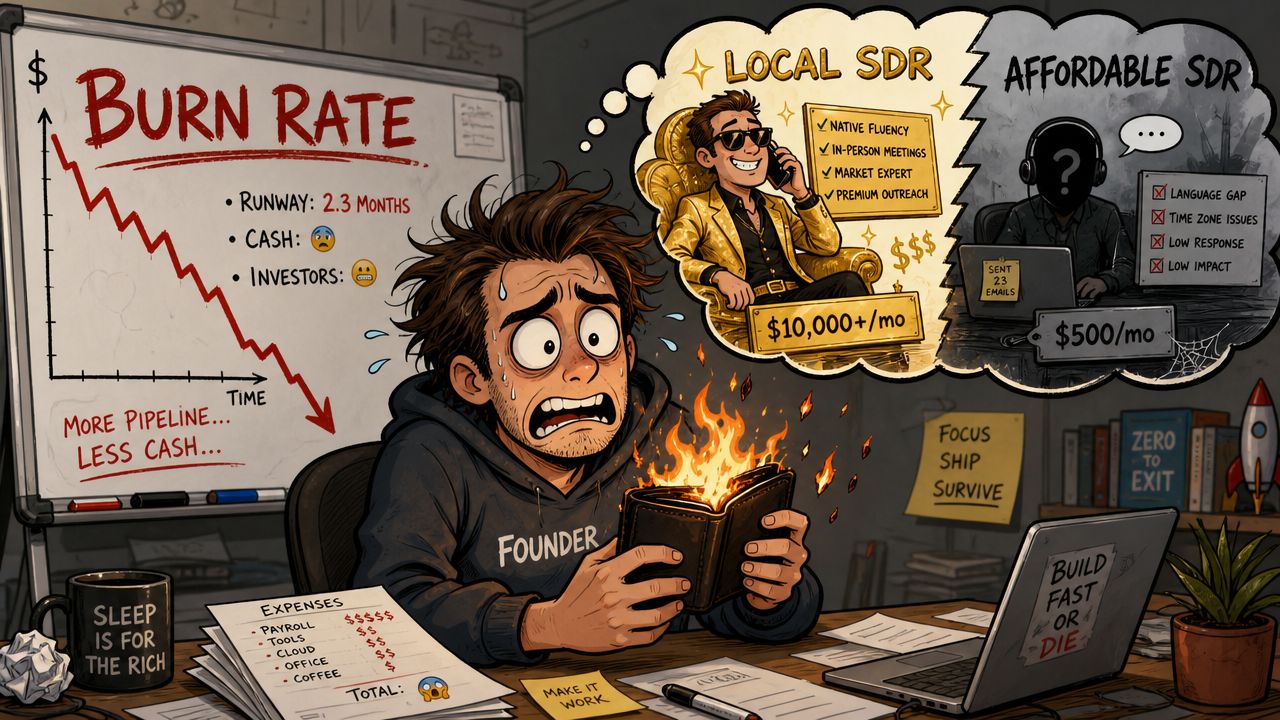
I've seen the same loop too many times. Founder hires local because it feels safer. Founder realizes “safer” means slower, pricier, and weirdly harder to manage because the candidate market is thin and everyone's oversold. Founder then swings hard in the opposite direction and hires offshore with no structure at all.
That second move is where things get messy.
A proper dedicated model can work extremely well. Companies that deploy dedicated offshore teams report 33% faster project delivery and labor costs up to 80% lower than fully in-house operations, while also securing exclusive talent that builds real familiarity with the product and business (VAMasters). That matters because context is the whole game. Reps who understand your market write better messages, handle objections better, and need less babysitting.
You're not buying labor. You're buying focused execution.
Because local hiring for sales has become a weird tax on ambition. Good reps are expensive. Average reps are also expensive. Bad reps somehow cost the most because they consume leadership attention while producing nothing useful.
Dedicated offshore teams aren't a desperation play. They're a strategic one, if you treat them like part of the company instead of a side bet you hope somehow turns into pipeline.
And yes, healthy skepticism is warranted. “Offshore” still makes some founders picture a support queue, a laggy Zoom call, and someone saying “sure” to everything while doing none of it. Fair. That happens when you build the team wrong.
A dedicated offshore team is not a random cluster of freelancers juggling five clients and a side hustle. It's an embedded unit that works inside your operating system. Your tools, your roadmap, your standards, your manager.
That's the distinction often overlooked.
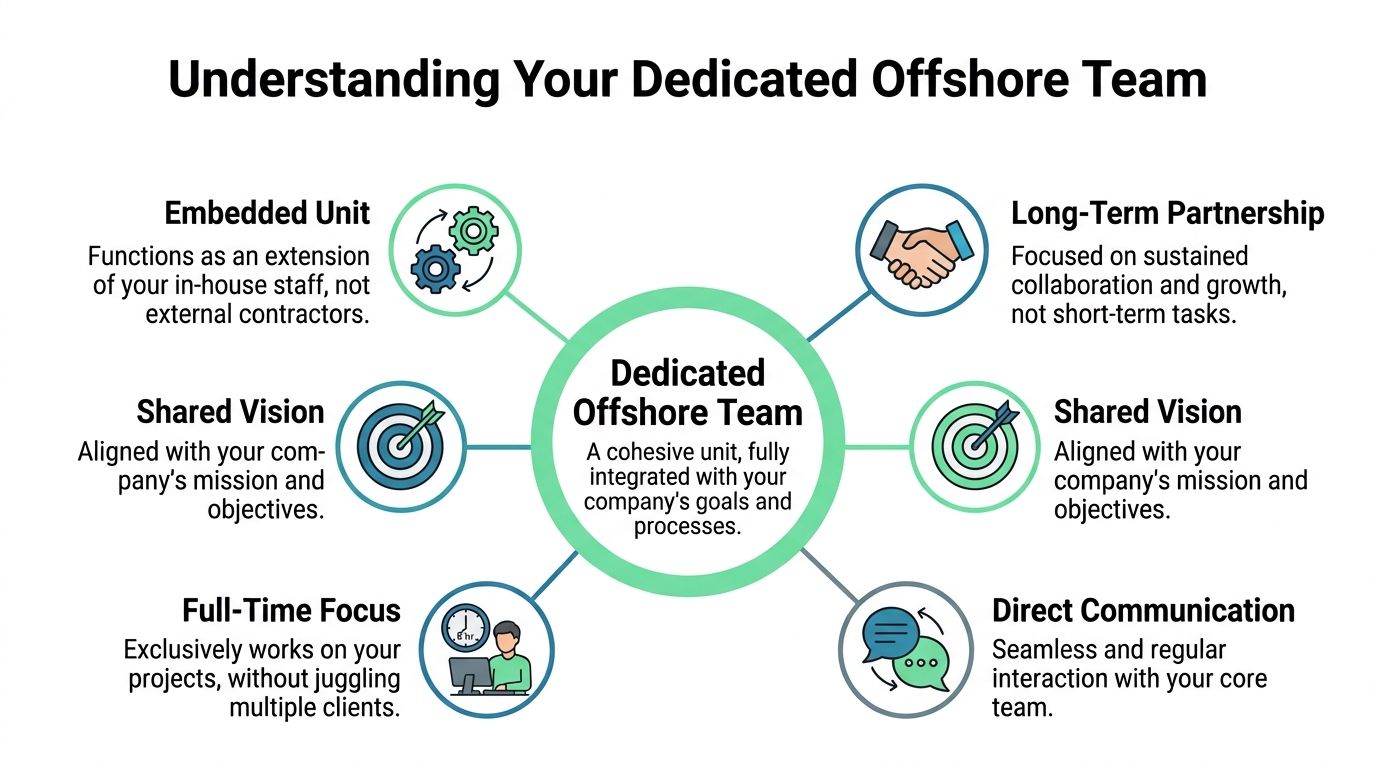
Think special ops unit, not hired mercenary. Mercenaries complete a task and disappear. An embedded unit learns your systems, understands the mission, and gets better over time because they're staying in the fight.
A well-structured dedicated offshore team operates as a long-term extension of your company, with the client keeping control over tasks and quality. Done right, this model can achieve 30 to 40% faster scaling velocity compared to fixed-price outsourcing (Softura).
That “client-led control” part is the whole point. You don't throw work over the fence. You assign priorities, review output, set standards, and decide what good looks like.
For dev teams, this usually means engineers and QA working directly in your backlog. For SDR teams, it means the reps live in your sales stack and your rhythm.
Practical rule: If your offshore reps aren't in your daily Slack channels and call review flow, they're not embedded. They're outsourced.
This isn't complicated, but it is disciplined.
That's a dedicated offshore team. Not cheaper labor. Greater strategic advantage.
You've got three ways to do this. One is heroic but exhausting. One is familiar but usually bloated. One is the cleanest choice for a startup that values speed.
You source candidates yourself. You screen them. You test them. You verify references. You figure out local payroll, contracts, compliance, equipment, timezone coverage, and whether the candidate who crushed the interview can do the job Monday morning.
Fun week.
DIY can work if you already have internal recruiting muscle, legal support, and a manager who loves process. Most early-stage SaaS companies have exactly none of those things. What they do have is a founder pretending hiring is a side quest.
The classic offshore agency sounds easier. In theory, they source talent, provide management support, and handle logistics. In practice, many agencies optimize for headcount sold, not output produced.
You also get a structural problem: the word “dedicated” can get slippery. Sometimes it means exclusive focus. Sometimes it means “mostly yours unless another account screams louder.”
For software teams, structure matters. Successful dedicated teams should be built as complete units, not scattered individuals, and 92% of Global 2000 companies rely on IT outsourcing as part of their model (Away Digital Teams). That same logic applies to sales. A lonely offshore SDR with no manager, no peer group, and no clear ownership isn't a team. It's a stranded asset.
A modern talent marketplace is usually the best path for startup teams. You get pre-vetted candidates, faster matching, more flexible terms, and fewer legal headaches. It strips out a lot of the overhead without trapping you in a giant agency wrapper.
For SDR hiring, that matters because volume is deceptive. A hundred résumés just means a hundred opportunities to waste your afternoon.
Here's the blunt comparison:
| Factor | DIY Hiring | Traditional Agency | Talent Marketplace (e.g., hireSDR.io) |
|---|---|---|---|
| Speed to shortlist | Slow | Medium | Fast |
| Vetting quality | Depends on your team | Uneven | Usually structured |
| Compliance handling | You own it | Bundled, but often rigid | Built-in and startup-friendly |
| Cost transparency | Variable | Often murky | Usually clearer |
| Flexibility | High, with chaos | Lower | High |
| Manager workload | Heavy | Medium | Lower |
| Best for | Teams with recruiting ops | Larger orgs that want full-service support | Startups that need reps fast without legal drama |
If you're an early or growth-stage SaaS company, don't romanticize DIY. And don't assume an old-school agency is safer just because it has a sales deck. The best setup is the one that reduces hiring risk, shortens time to productive work, and doesn't turn cross-border hiring into a legal scavenger hunt.
That's why marketplaces keep winning. They fit the way startups operate: fast, imperfect, and allergic to long lock-ins.
Monday morning. Your U.S. sales leader wants 40 new target accounts worked by Friday. Your founder wants pipeline now. Your offshore SDRs are active in the CRM, sending emails, logging calls, and burning hours. Two weeks later, nothing serious has moved. No qualified meetings. No clean notes. No pattern you can coach.
That is the offshore sales failure pattern nobody talks about. The problem usually is not effort. It is translation. Market translation, buyer translation, and manager translation.
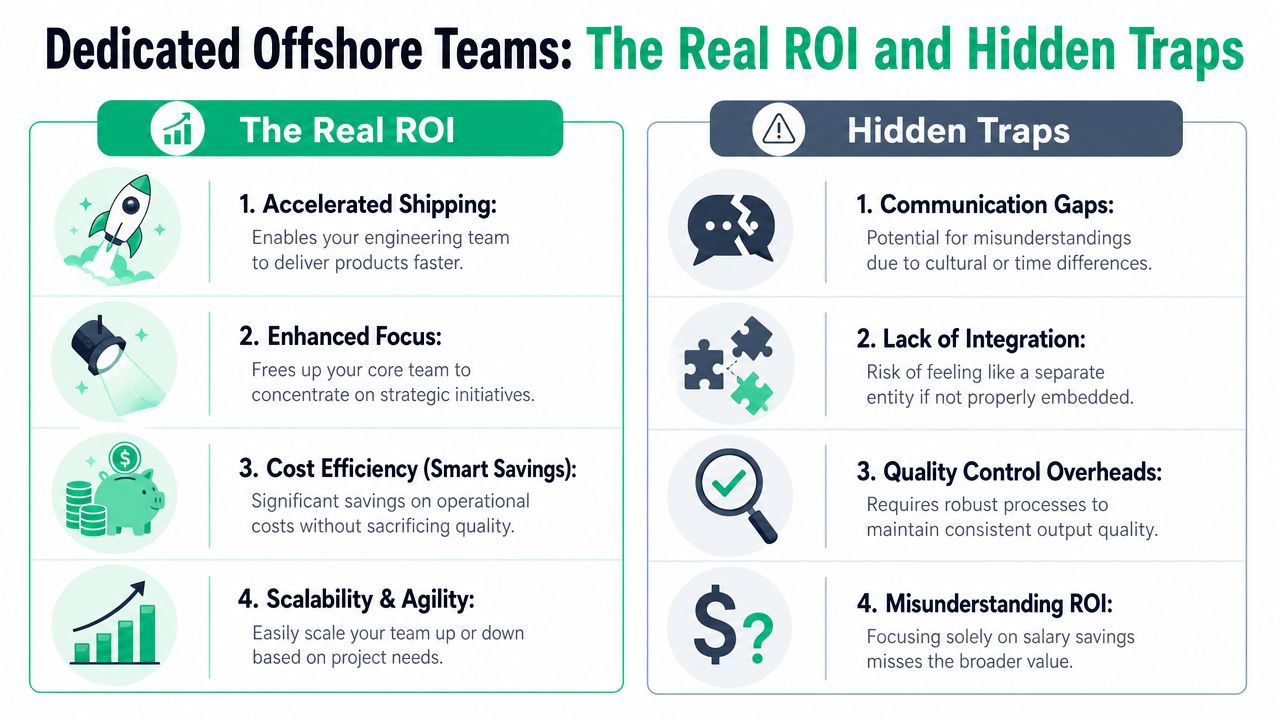
Founders fixate on salary arbitrage and miss the metric that actually matters. Time to productive pipeline.
A strong offshore SDR team gives your local sales leaders more coverage without forcing them to spend every afternoon sourcing candidates, cleaning up weak messaging, or chasing compliance paperwork. It also lets your AEs stay focused on closing, while SDR capacity expands account coverage, follow-up speed, and timezone reach.
That is the payoff. More shots on goal, faster.
Cost still matters, obviously. But if your cheap team needs constant rescue, the savings are fake. Use a full employee cost breakdown before you approve any offshore hiring plan, because wasted manager time and missed pipeline targets hit harder than payroll.
Developer offshore guides dominate search results, and they create a dangerous assumption. Founders start treating SDR hiring like a lighter version of support or admin work.
It is not.
Outbound sales depends on judgment under pressure. Reps need to know when to push, when to challenge, when to personalize, and when to break script. Analysts at ConnectMKD found that 70% of offshore SDRs fail because they lack a proactive outbound mindset, not technical skills, and companies without culture-specific vetting see 45% lower pipeline conversion.
That lines up with what happens in the field. A rep can speak fluent English, look polished in interviews, and still miss the tone of a U.S. buyer completely. They hesitate on direct asks. They over-explain. They avoid healthy tension on cold calls. Activity looks fine. Pipeline does not.
Hire for outbound instinct and commercial judgment first. Fluency alone will not save you.
This is the part founders underestimate until it slows hiring to a crawl.
You want reps live fast. Legal wants contracts right. Finance wants payment and tax classification buttoned up. Sales wants flexibility, because half your first hires will need replacing if you hire too loosely. Those priorities clash hard in offshore SDR hiring.
DIY gives you speed at the start, then drags you into classification risk, local labor rules, and operational mess. Traditional agencies reduce some admin, but they often lock you into rigid terms and weak visibility. A vetted marketplace is usually the better answer for pipeline acceleration because it cuts hiring time without making you absorb the full compliance burden yourself.
That matters more for SDRs than developers. Sales hiring has higher churn, faster feedback loops, and less tolerance for dead weight.
The expensive problems show up after the contract is signed:
Onboarding is where a lot of this starts. If your process lives in Slack messages and tribal knowledge, new reps will guess their way through your market. Use documented workflows from day one. The StepCapture guide to remote onboarding is a good reference for turning scattered instructions into repeatable training.
Here is the blunt truth. Offshore SDR programs fail less from talent shortages than from sloppy setup. If you want ROI, stop measuring cheap headcount and start measuring speed to competent execution.
You hire two offshore SDRs on Monday. By Friday, one is sending generic emails that sound like a bot wrote them, and the other is blocked because nobody sorted contracts, access, or basic CRM rules. That mess is avoidable. It starts by treating offshore sales hiring like revenue hiring, not admin.
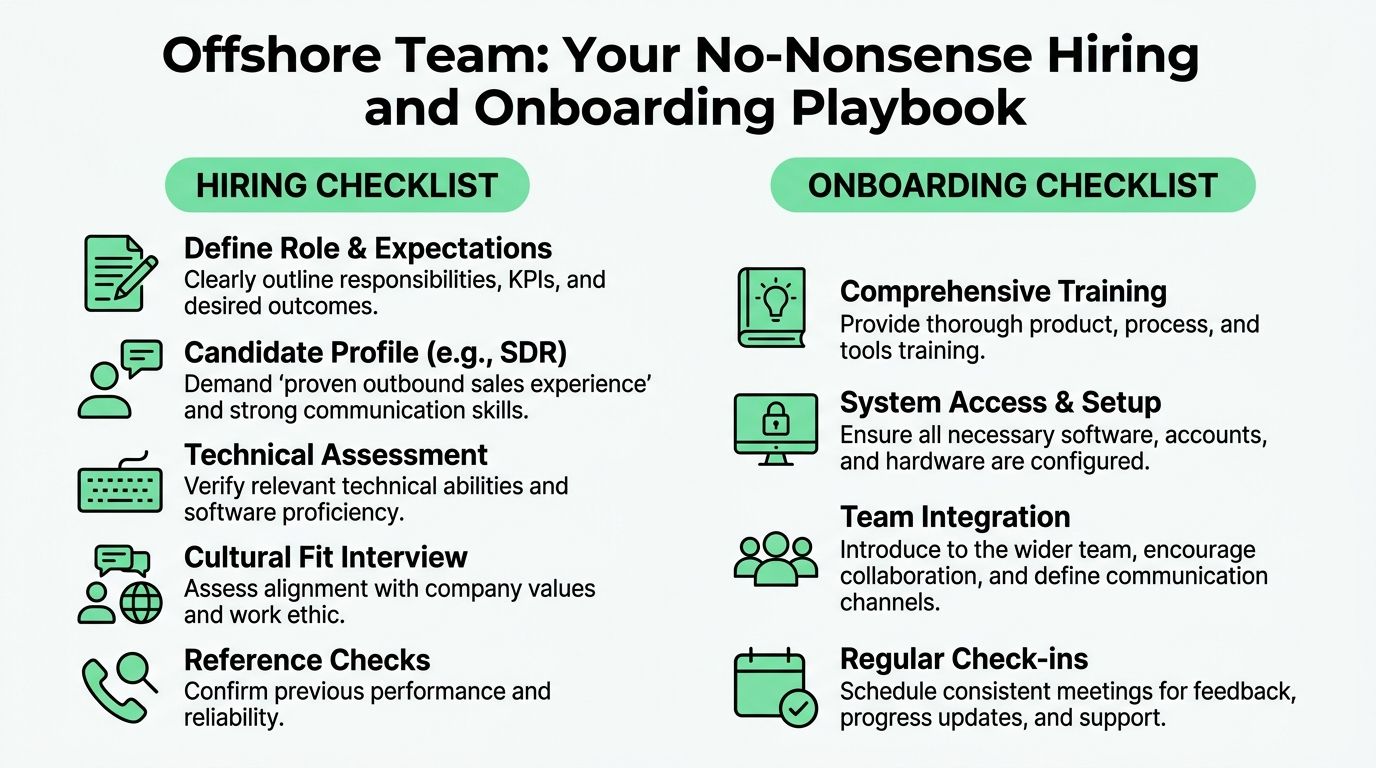
Offshore SDRs fail for two reasons founders underestimate. First, they screen for fluent English instead of sales judgment. Second, they ignore the cultural translation gap. A rep can speak polished English and still miss the tone, urgency, and subtext that gets a prospect to reply. In sales, that gap shows up fast.
Interview charisma is useless. Test the work.
For offshore SDR roles, I would screen for four things: message quality, live conversation control, CRM discipline, and ICP judgment. If a candidate cannot write a clean cold email, handle objections without freezing, and explain how they use Apollo.io, HubSpot, Salesforce, or Outreach, they are not ready to touch pipeline.
Use practical tests:
For SDRs, cultural translation matters as much as raw effort. Ask candidates to rewrite a message for a US founder, a UK operator, and an Australian sales leader. If every version sounds the same, they will struggle in live outbound.
Strong offshore SDRs are easy to recognize if you stop rewarding polish.
That last point matters more than founders admit. Sales leaders want pipeline now. Legal and ops want contracts, data handling rules, and employment structure handled correctly. Both are right. If you skip the paperwork to get reps live faster, you create a bigger slowdown later. Use a clear process for how to hire international employees before day one, not after the first problem.
Do not dump a new offshore SDR into Slack, hand them a script, and hope repetition fixes everything. That is how you get fake activity and weak meetings.
A good onboarding plan teaches the market, the message, and the rules in the right order. Reps need product context, ICP clarity, objection handling, CRM standards, and real examples of what a good call sounds like. They also need to understand what they cannot say, send, or promise. Sales onboarding without compliance training is lazy management.
A practical rollout looks like this:
Document the work. Do not rely on tribal knowledge or random Zoom explanations. The StepCapture guide to remote onboarding is useful because it shows how to turn scattered instructions into repeatable training.
My recommendation is simple. If you need offshore SDRs to accelerate pipeline, hire through a vetted marketplace or partner that has already solved screening, onboarding, and compliance setup. Building all of that from scratch for one or two reps is usually a founder vanity project.
Monday, 9:07 a.m. Your offshore SDR booked three meetings overnight. By 11:30, two are already dead. One prospect was never qualified, another was pitched with language your legal team would never approve, and your AE is asking why the notes in the CRM read like guesswork. That is what bad offshore management looks like. The problem is rarely effort. It is translation, judgment, and control.
Hiring offshore SDRs is easy. Managing them well is where founders either build a real pipeline machine or light money on fire.
Start with one operating rhythm. One stack. One definition of a qualified meeting. If your onshore team uses one process and your offshore team uses a watered-down version, quality falls fast. Offshore sales teams need tighter management than offshore engineering teams because every mistake hits a buyer directly. A bad intro email, a sloppy follow-up, or a rep who misses cultural cues can damage pipeline and brand at the same time.
Your tools should be obvious. Slack for fast communication. Zoom or Google Meet for coaching. HubSpot or Salesforce for pipeline visibility. Apollo.io or Outreach for sequencing and execution. Keep ownership clear and visible. If your SDRs, managers, and AEs cannot answer who owns targeting, follow-up, call reviews, and handoff notes, you do not have a system. You have activity.
A few rules keep the team under control:
The cultural translation gap is the part founders miss. Offshore SDRs are often fully capable of doing the work, but they still need coaching on buyer tone, regional phrasing, qualification nuance, and what signals real intent in your market. A rep can follow the script and still sound wrong. That is how you get polite replies, weak discovery, and meetings that never progress.
For practical management habits, Madeira Remote's playbook for managing remote teams is worth reading because it focuses on manager discipline, communication cadence, and accountability.
Then deal with compliance before it slows the whole team down.
Founders love the idea of fast offshore hiring. Then payroll setup, contracts, local labor rules, and data access approvals drag onboarding into a month-long mess. Analysts at SD Solutions found that 80% of startups delay offshore SDR onboarding by 30 or more days because of cross-border payroll and legal issues. That delay does not just waste time. It pushes pipeline targets back, breaks training momentum, and leaves new reps idle before they even start selling.
The fix is blunt. Do not build your offshore SDR management model around manual workarounds and founder supervision. Use a vetted marketplace or partner that already handles hiring, payroll, compliance, and management structure. That setup gives you speed without the usual legal and operational drag, which is exactly what you need if the goal is pipeline acceleration, not another side project to manage.
You hire three offshore SDRs on Monday. By Friday, one is sending stiff outreach that sounds translated, one is blocked on contract paperwork, and one is booking meetings that never convert because the buyer heard politeness, not conviction. That is how offshore sales goes sideways. Not because the reps are bad, but because founders treat offshore hiring like a cost play instead of a revenue system.
Dedicated offshore teams work when you build them as a real operating unit with clear ownership, sales-specific training, and cross-border support baked in from day one. That matters even more for SDRs than developers. A developer can ship internally for a week. An SDR is live in your market voice every day, and every weak opener, flat objection response, or culturally off follow-up shows up directly in pipeline quality.
The part too many guides miss is the gap between language fluency and commercial fluency. An offshore SDR can speak excellent English and still miss how your buyers hedge, stall, challenge pricing, or signal real intent. Founders who ignore that gap get activity metrics, not revenue.
Speed creates a second problem. You want reps selling fast, but payroll, contracts, labor rules, security access, and manager bandwidth slow everything down. Build it all yourself and you spend your best hours fixing operations instead of building pipeline.
That is why a vetted marketplace is usually the better answer for offshore sales hiring. It cuts the time wasted on bad screening, reduces compliance drag, and gives you a cleaner path from headcount plan to meetings booked. If your world also includes investors, multiple markets, and distributed operators, this practical look at streamlining cross-border VC deals makes the same point from a different angle. Cross-border growth breaks when execution gets sloppy.
If you need SDRs fast and do not want to burn a month screening weak candidates, sorting out compliance, and pretending “good communication skills” means sales skill, hireSDR.io is the shortcut. It gives you vetted offshore SDR and BDR talent, built-in cross-border hiring support, and a faster path from job post to pipeline.

Most advice on the candidate screening process is backwards. It tells you to polish the job post, skim resumes faster, and trust your gut in...

Your pipeline is soft, your founder calendar is wrecked, and somebody on LinkedIn just told you to “hire A-players.” Useful. Right up there with “sleep...

Stop hiring “sales ninjas” and start building a real team. You need to hire a salesperson. Sounds simple until the applicants start calling themselves Growth...

Tell us who you need. We'll have pre-vetted candidates in your inbox within 72 hours. No commitment until you hire.