Your pipeline is soft, your founder calendar is wrecked, and somebody on LinkedIn just told you to “hire A-players.”
Useful. Right up there with “sleep more” and “eat clean.”
If you're trying to figure out how to build high performing teams, especially remote SDR and BDR teams, the usual advice is painfully incomplete. It talks about culture, communication, and trust as if your reps magically book meetings because everyone smiled during the Monday standup.
They don't.
Remote sales teams live or die on execution. Clear targets. Tight hiring filters. Fast onboarding. Relentless coaching. A manager who manages. That's the game. Everything else is décor.
Founders love shortcuts. I know because I've bought most of them.
You post a role, skim a few polished resumes, run some Zoom interviews, convince yourself you've got “great people,” then wonder why outbound still feels like dragging a piano uphill. The problem usually isn't effort. It's that you hired into fog.
Remote teams make that worse. The actual issue isn't just finding talent. It's preserving speed and accountability across time zones without leaning on constant check-ins, which FranklinCovey's coverage on high-performing teams points out is exactly where mainstream advice falls apart.
Most bad SDR teams don't fail because nobody cared. They fail because nobody designed how the work should happen when the manager isn't in the room.
That's why “hire A-players” is lazy advice. A-player for what? Selling to whom? In which timezone? With what message? Against what quota? Inside what operating rhythm?
If you skip those questions, you're not building a team. You're collecting expensive guesses.
And yes, this is also why skills-based hiring matters more than pedigree. Fancy logos on a CV don't help if the candidate can't prospect, write, research, and operate independently. If you want a cleaner way to think about that, this breakdown of skills-based hiring gets the framing right.
Most founders don't need “better talent strategy.” They need fewer fantasies.
They assume one great rep will create pipeline momentum by force of personality. That only works in stories founders tell each other after two coffees and half a seed round. In real life, one rep without structure becomes one confused rep with Slack access.
Here's the uncomfortable truth. High performance is built. Methodically. Usually after a few hiring mistakes, one regrettable manager promotion, and at least one quarter where everyone says “top of funnel looks light” like it's weather.
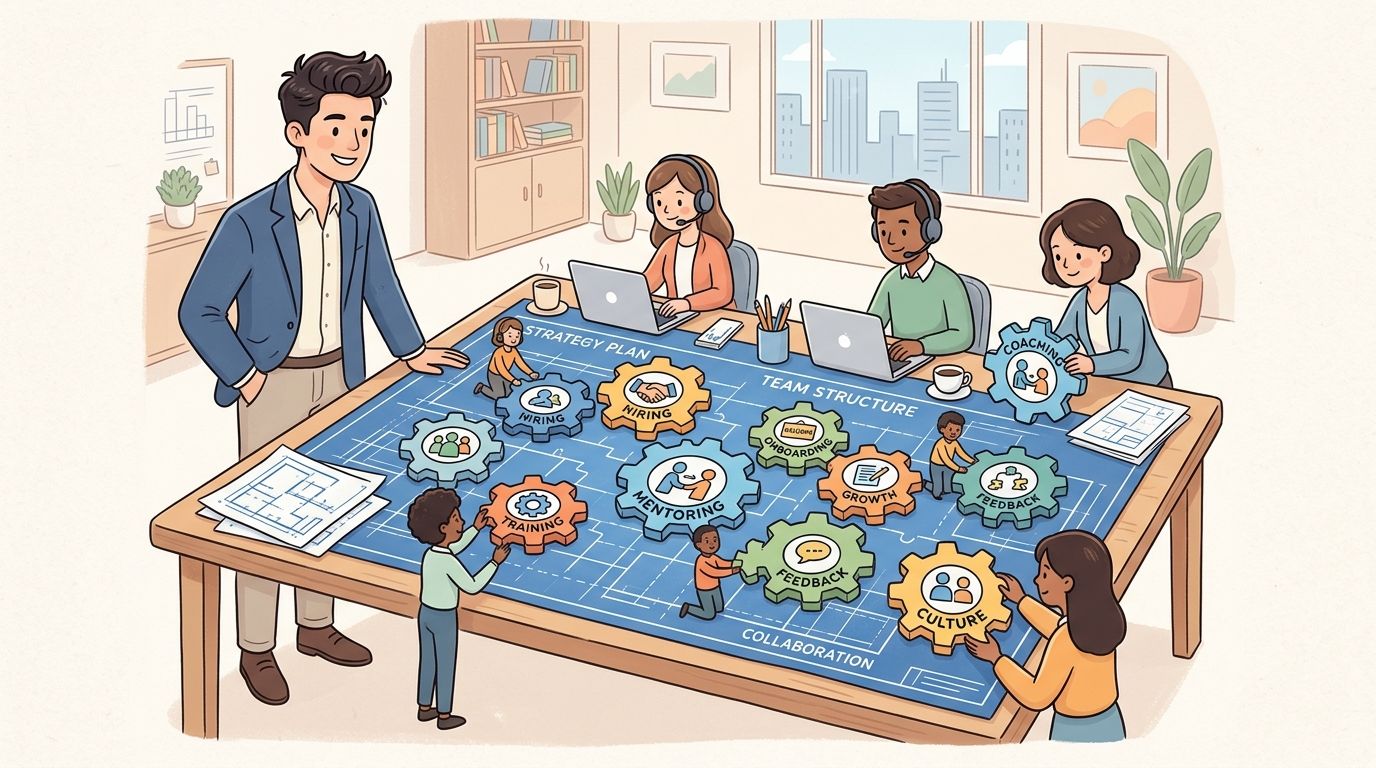
Before you hire anyone, build the machine they're stepping into.
That means a shared purpose first, then measurable goals. Teams with that kind of alignment are reported to deliver 81% lower absenteeism, 14% higher productivity, and 23% higher profitability according to AIHR's analysis of high-performing teams. The point isn't to admire the numbers. The point is that clarity pays.
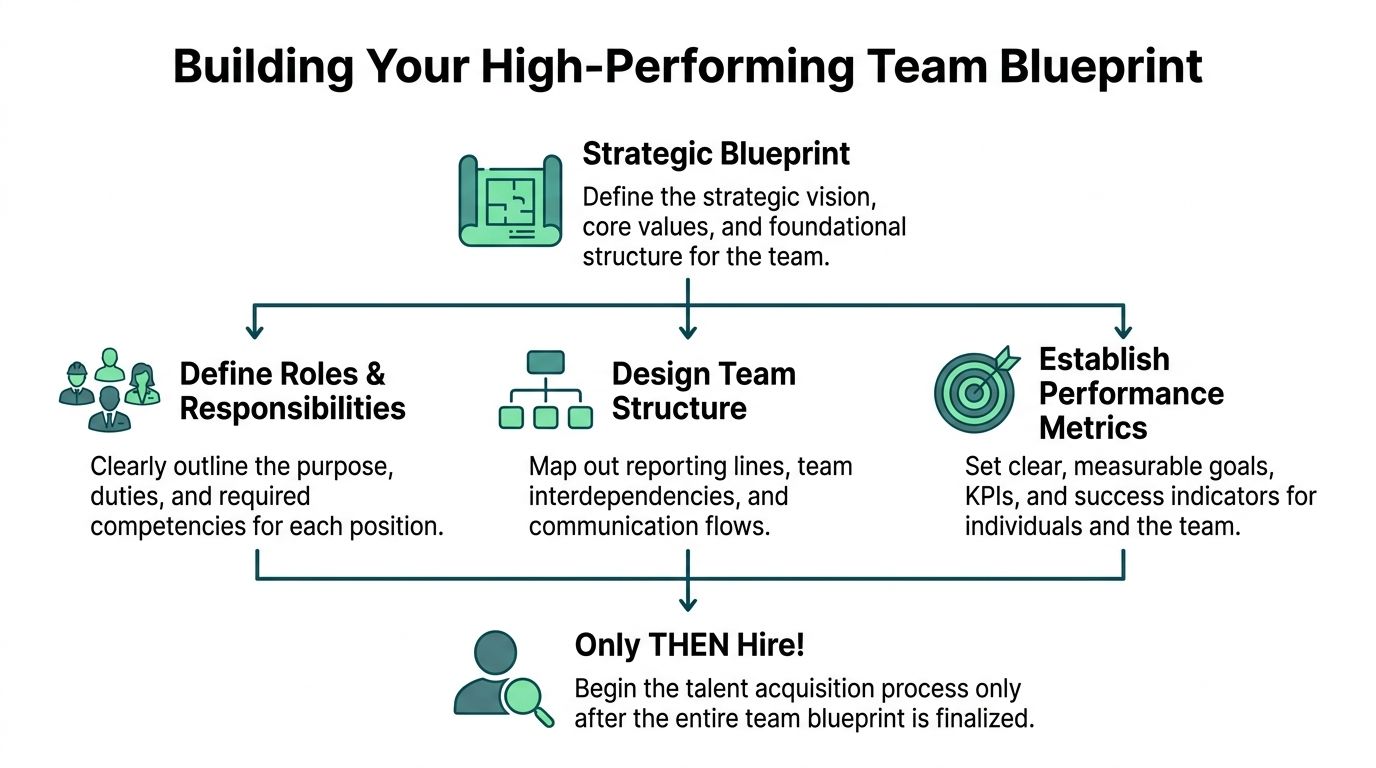
Don't start with a job post. Start with these questions:
Who are you selling to
Spell out your ICP in plain English. Industry, company size, buyer title, buying pain, trigger events.
What pain do you solve
Pick the top problems your product fixes. If your reps can't explain the problem cleanly, they'll pitch features and call it discovery.
What counts as a qualified meeting
Be strict. “Booked a call” is not enough. You need meeting criteria that sales and marketing both accept.
What activity model fits your motion
A rep selling to founder-led startups should not work the same way as a rep prospecting enterprise healthcare accounts.
That's your blueprint. Without it, you're hiring for vibes.
Founders often write job descriptions like they're trying to impress candidates. Wrong audience. Your first document should be the internal scorecard.
Use a simple table. If you can't define success this clearly, you're not ready to hire.
| Area | What good looks like |
|---|---|
| Prospecting quality | Finds accounts and contacts that actually match your ICP |
| Writing | Produces concise, relevant outbound emails without sounding like a template machine |
| Research | Personalizes using real business context, not fake flattery |
| Call execution | Opens confidently, handles objections, asks for the meeting directly |
| CRM discipline | Logs activity properly and follows process without being chased |
| Coachability | Adapts after feedback instead of defending every mistake |
Practical rule: If a rep misses the mark, you should be able to point to the scorecard, not your mood.
Remote SDR teams don't need more meetings. They need clear rules.
Decide these before hiring:
Most startup hiring goes off the road. The founder wants urgency but hasn't defined process. The rep wants autonomy but hasn't been given guardrails. Then everyone blames “fit.”
No. The blueprint was missing.
Hiring remote SDRs the old way is a tax on your attention.
You post on job boards. Hundreds of applicants appear. Half are spraying generic resumes everywhere. A chunk can talk well on Zoom but can't write a decent outbound email. Some have “sales experience” that turns out to be customer support with ambition.
This is why founders start hating hiring.
Remote SDR work is not just “being good with people.” It's a bundle of specific skills:
If your interview process doesn't test those things directly, you're gambling.
Here's a much better filter. Give finalists a real task.
Ask each candidate to do something close to the job:
Prospect selection
Find a shortlist of accounts that match your ICP.
Message writing
Draft one outbound email to a specific buyer.
Recorded pitch
Send a short video explaining why they chose that angle.
Call handling
Role-play a common objection live.
None of this needs to be theatrical. It just needs to reveal whether the person can think, write, and sell without a manager holding the bicycle.
A polished interview is cheap. A solid work sample is expensive to fake.
Don't overcomplicate your review.
A strong candidate usually shows:
| Signal | What it tells you |
|---|---|
| Good target selection | They understand who should actually buy |
| Clear email copy | They can write for a busy prospect |
| Specific reasoning | They aren't guessing their way through the market |
| Crisp communication | They can explain choices without rambling |
| Fast completion | They can execute without drama |
And yes, if you're thinking “this sounds like work,” that's because it is. Hiring is one of those jobs founders underestimate until it eats two weeks and produces one mediocre shortlist.
That's also why some teams use a recruiting layer instead of building this from scratch every time. For example, remote SDR hiring through hireSDR.io is one way to get pre-vetted candidates into the process faster, especially if you need outbound capacity quickly and don't want your VP Sales moonlighting as a recruiter.
Not magic. Just advantage.
A good hire can still fail in a bad onboarding system.
This happens constantly. Company ships a laptop, hands over Salesforce, drops a list of leads into a spreadsheet, and calls that “enablement.” Then three weeks later everyone acts shocked that the new rep sounds unconvincing and has no momentum.
That's not the rep's fault. That's lazy onboarding.
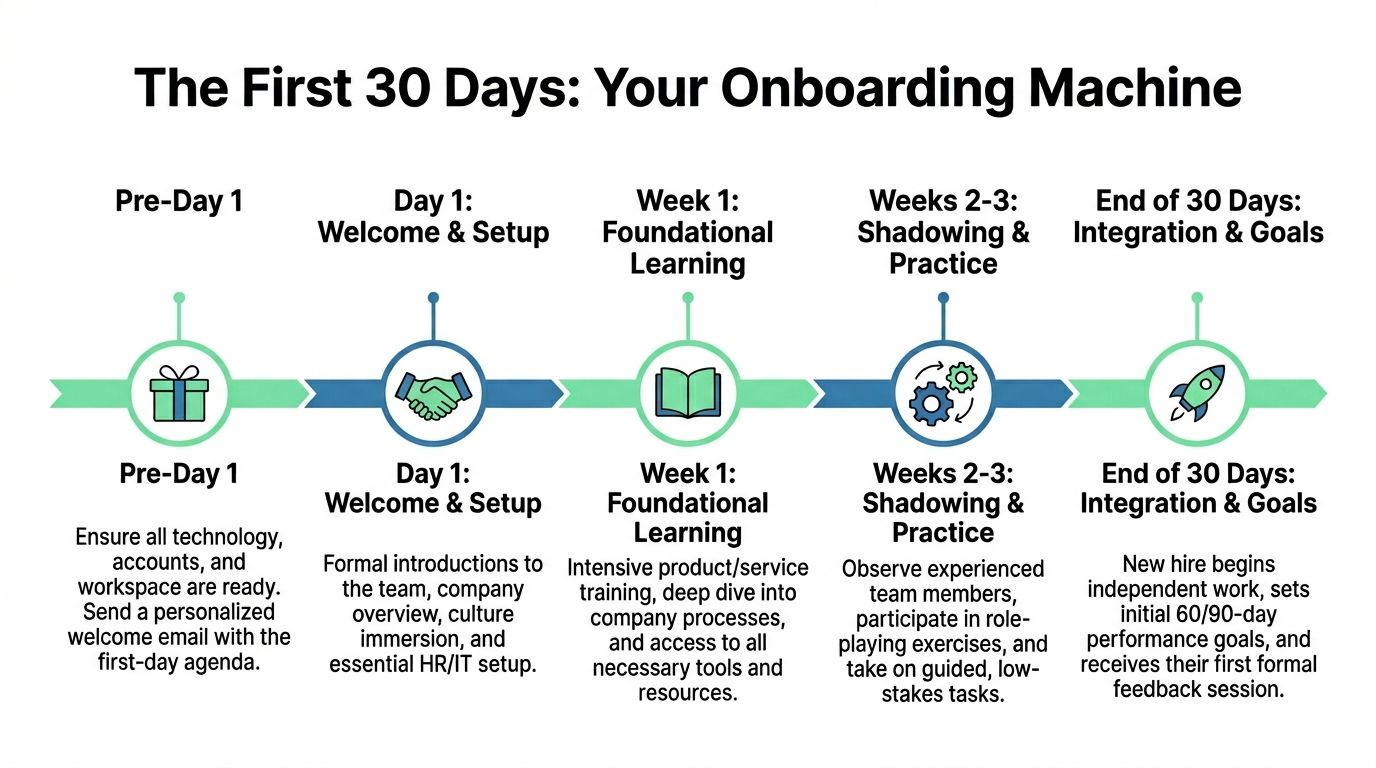
Your first month should run like a system.
No live prospecting yet. First, the rep needs context.
They should read your website, decks, objection notes, messaging docs, CRM standards, and recorded sales calls. They should be able to explain your product, your buyer, and your core pain points back to you without sounding like they swallowed your homepage.
Give them structure:
Now they practice in a low-risk setting.
Run mock calls. Throw common objections at them. Make them build lists, write sequences, update CRM records, and role-play handoffs to AEs. This is the week where sloppiness gets corrected before prospects ever see it.
A lot of founders skip this because they want activity fast. Then they wonder why the rep's first real calls sound like a hostage note.
By week 3, the rep should start real outreach. But don't dump full expectations on day one. Give them a ramped target with heavy review.
Managers need to stay close on message quality, account selection, and call confidence.
Use a simple progression:
| Stage | Focus |
|---|---|
| Early activation | Small batch outreach with daily review |
| Mid activation | More independence on list building and messaging |
| End of month | Full ownership of a defined prospecting block |
The first win matters. Celebrate the first qualified meeting like it counts, because it does.
Onboarding isn't just knowledge transfer. It's belief transfer.
You want the rep to feel, “I know what good looks like here, I can do this, and my manager won't disappear the second I start dialing.” That confidence changes how they write, call, and respond to setbacks.
A proper onboarding machine also keeps standards consistent across future hires. One rep shouldn't get a world-class ramp while the next gets “jump into Slack and ask around.”
That's not scale. That's chaos in a branded hoodie.
Once reps are live, the manager becomes the key factor.
Not the loudest rep. Not the founder dropping occasional wisdom in Slack. The manager.
Gallup found that the team manager accounts for 70% of the variance in team engagement, and that highly engaged teams are 23% more profitable and 18% more productive. That's the bluntest argument you'll ever get for why coaching matters.
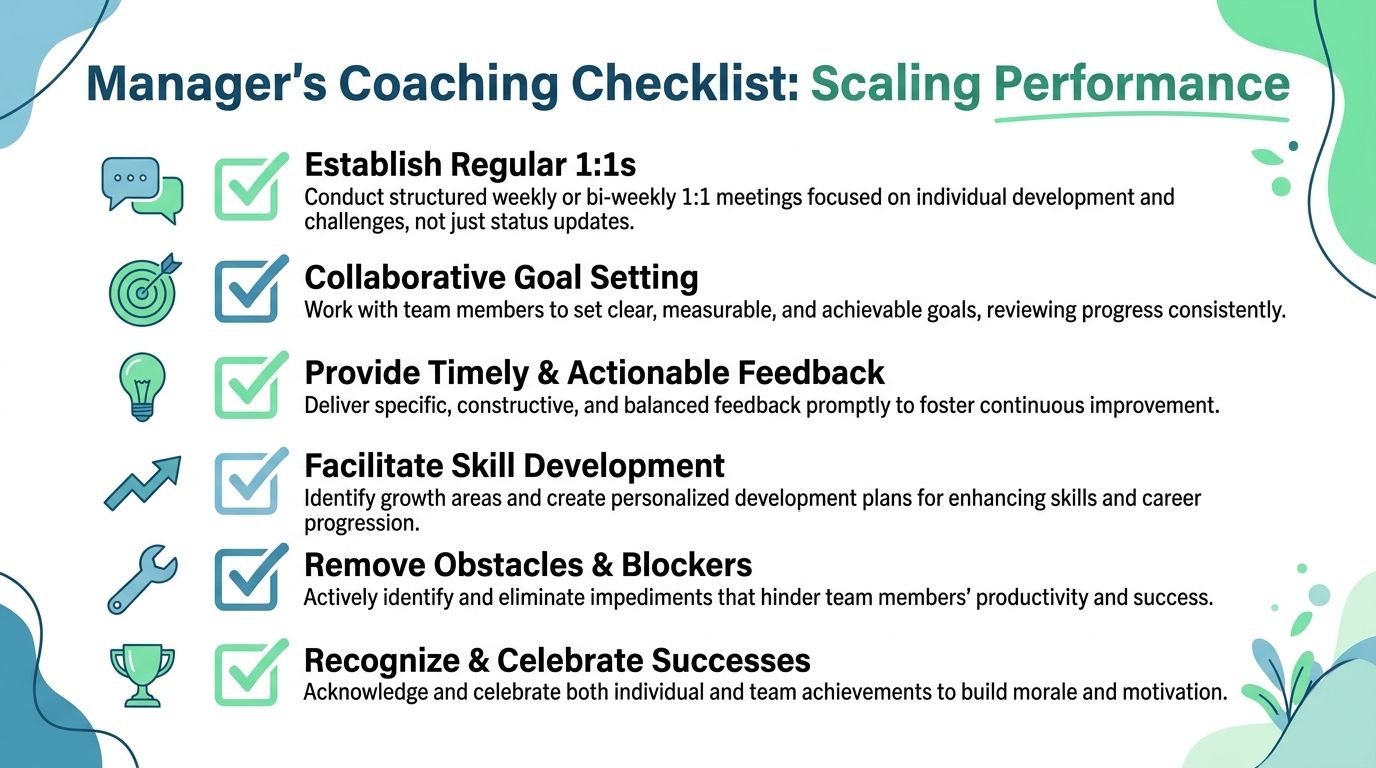
If your coaching only happens when someone misses target, you don't have a coaching system. You have managerial jump scares.
A useful cadence looks like this:
Weekly one-to-one
Review activity, conversion points, message quality, blockers, and one skill focus.
Team call review
Break down one strong call and one messy one. Public learning beats private confusion.
Pipeline inspection
Look at booked meetings, no-shows, quality issues, and follow-up discipline.
Message audit
Read actual emails and LinkedIn messages. Reps don't improve from abstract advice.
Blocker removal
Fix the operational junk slowing them down, whether that's bad lists, muddy messaging, or tech friction.
A lot of managers weaponize dashboards. That's lazy.
If dials are low, ask why. If reply rates are weak, inspect the copy. If meetings are booked but not qualified, look at targeting and discovery handoff. Metrics tell you where to look, not who to blame.
Many SDR leaders fail when they try to be the superhero closer instead of the builder of a repeatable team.
A manager's job is not to prove they could still do the rep's job. It's to make the rep better at theirs.
Use this in your next one-to-one:
What happened last week
Start with facts, not feelings.
Where did the process break
Targeting, messaging, activity, confidence, objection handling, or follow-up.
What will change this week
Pick one adjustment. Not seven.
What support is needed
More examples, better data, live role-play, tech help, or tighter priorities.
What will be reviewed next time
Close the loop. Coaching without follow-up is motivational wallpaper.
If you want more practical ideas on systemizing this, sales productivity improvements usually come from cleaner process and management discipline, not motivational speeches and another dashboard.
Keeping good SDRs is harder than hiring them.
Once a rep gets competent, recruiters notice. Competitors notice. They notice. Suddenly the person you finally trained can see six new opportunities in their inbox and one of them promises “career acceleration” with suspicious enthusiasm.
So let's skip the office-snack nonsense. Remote SDRs stay for two real reasons. They can see a path forward, and they feel safe enough to improve in public.
Your top reps should know what comes next.
Not vaguely. Not “we love to promote from within.” That phrase has been abused enough already. Show them the routes. AE. Team lead. Customer success. RevOps. Marketing. Whatever makes sense in your business.
Document the signals required for each move:
People don't need fantasy. They need visibility.
This is the part cynical founders roll their eyes at until they manage a team through a rough quarter.
Research shows that psychological safety is responsible for over 50% of positive changes in team communication, and that high-performing employees in those environments are 87% less likely to leave their organization. That's not soft. That's operational.
What does it look like in practice?
| Bad culture | Strong culture |
|---|---|
| Reps hide mistakes | Reps surface problems early |
| Managers punish bad calls | Managers coach bad calls |
| Questions get treated as weakness | Questions improve the playbook |
| Feedback arrives late and vaguely | Feedback arrives fast and specifically |
If reps are scared to sound stupid, they'll also be scared to try something smart.
When it's time to scale, don't improvise a second team with a new set of rules.
Promote carefully. Give future leaders a real operating model. Reuse the blueprint, hiring filters, onboarding machine, and coaching cadence that already work. That's how you build a second pod without breaking the first one.
Most companies don't have a talent problem. They have a system problem disguised as a talent problem.
Build the system, and strong people get stronger inside it.
If you need remote SDR capacity fast and don't want to spend weeks rebuilding the sourcing and screening process yourself, hireSDR.io helps teams access pre-vetted SDR and BDR talent for full-time or part-time hiring, with support for cross-border onboarding and payroll. It's a practical option when you need pipeline coverage quickly but still want a structured hiring process.
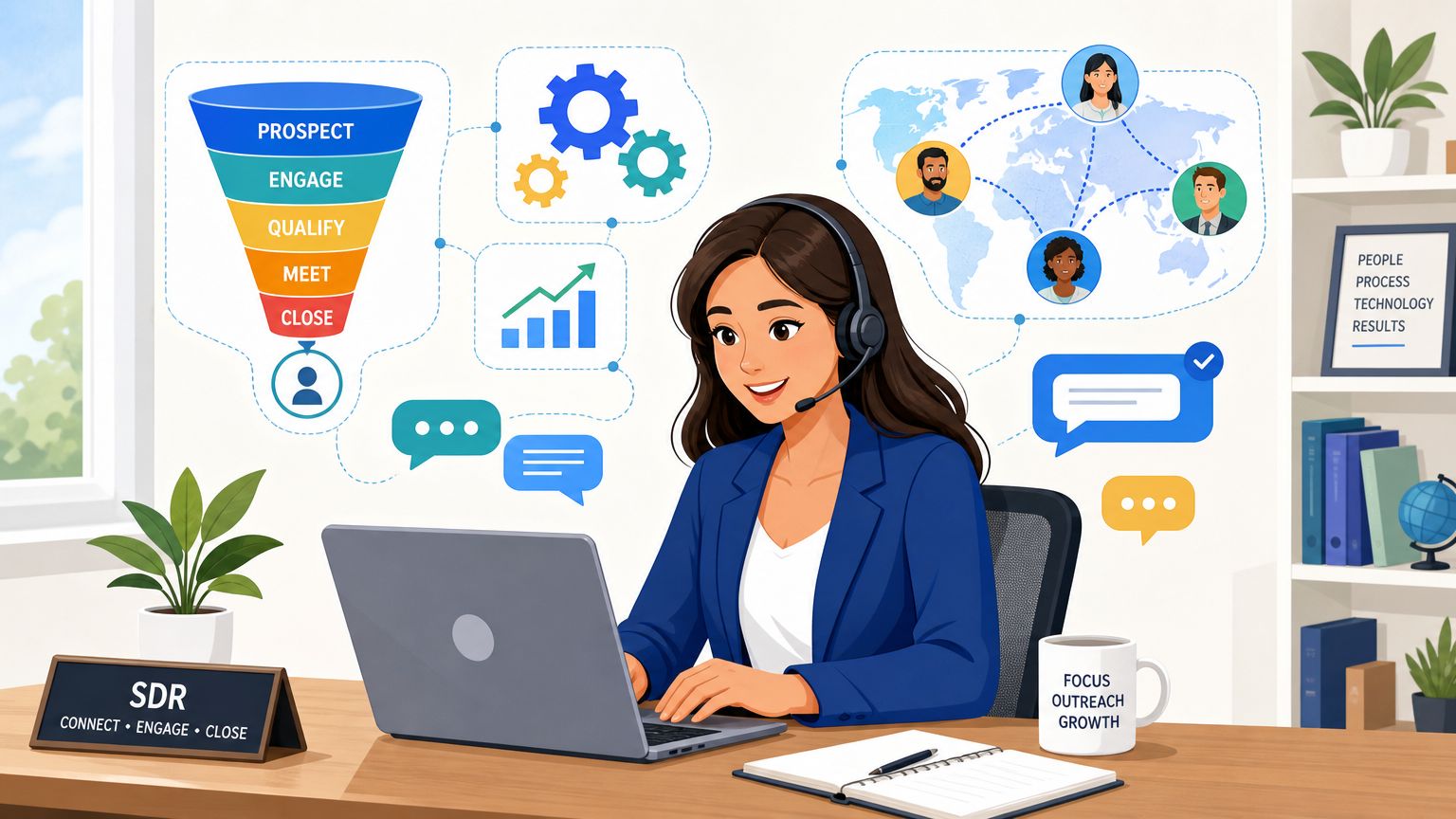
Most advice on hiring a remote sales development representative is nonsense. It treats the role like a bargain-bin staffing exercise. Find someone cheap, hand them...

Your best Account Executive is doing detective work in Apollo, cleaning CSVs, and chasing no-shows instead of closing. Your pipeline has activity, sure, but the...
The common 1.25x to 1.4x salary rule is a myth. In practice, an employee's actual cost is often closer to 1.5x to 2.5x salary, especially...

Tell us who you need. We'll have pre-vetted candidates in your inbox within 72 hours. No commitment until you hire.