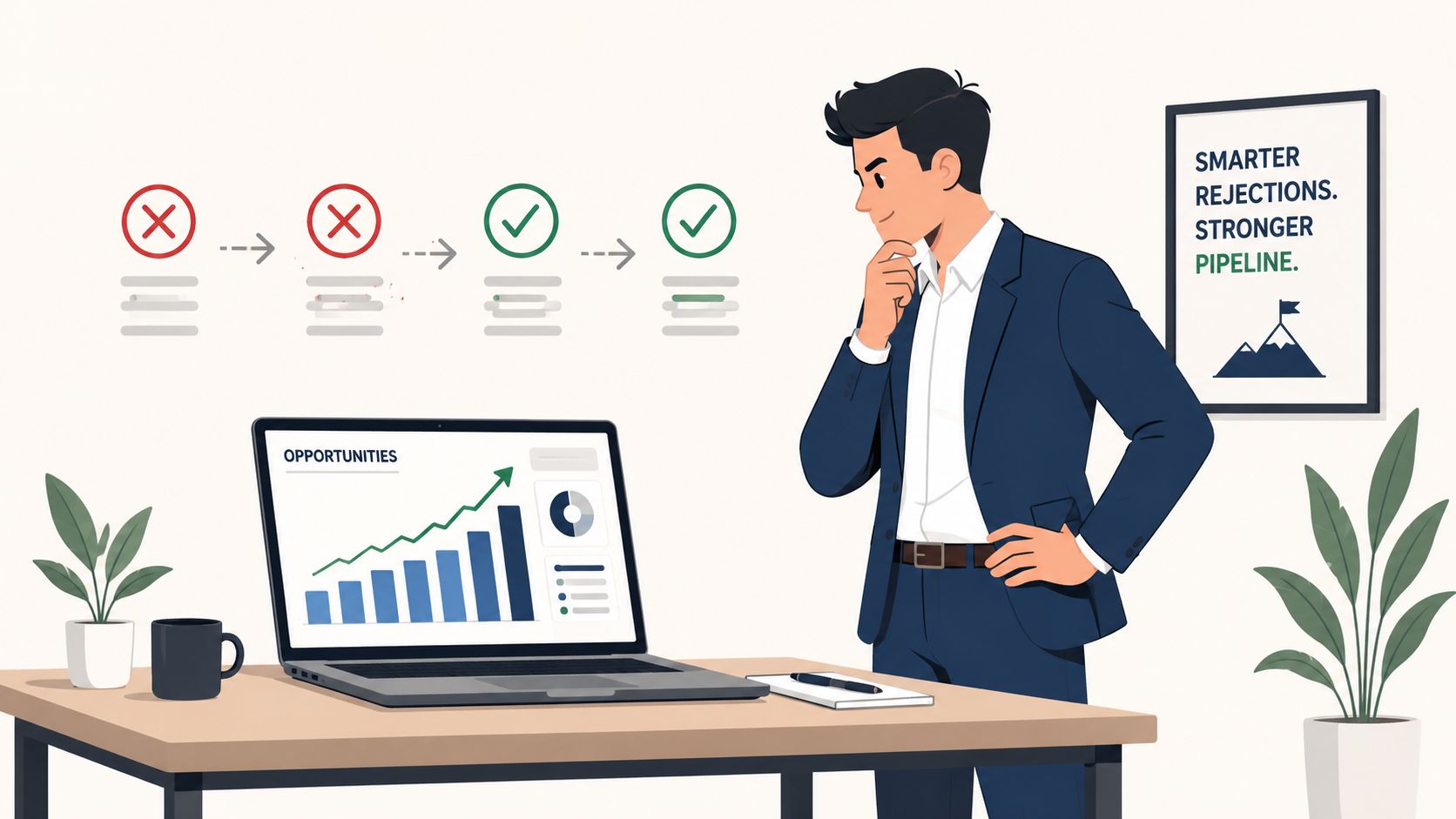
The worst advice in sales is “don't take it personally.”
Of course you take it personally. You're a human being calling strangers, getting ignored, brushed off, and occasionally treated like you just interrupted a hostage negotiation. Telling reps not to feel that is lazy management dressed up as wisdom.
The better advice is this: stop interpreting rejection in sales as a personality problem. It's an operating condition. If you build your whole identity around whether one prospect replies, you'll burn out fast and start making bad pipeline decisions even faster.
I've built SDR teams from zero. The reps who last aren't the ones with magical confidence. They're the ones who understand the game they're playing. Sales is not a single-shot persuasion contest. It's a repetition business with a lot of silence in the middle.
“Don't take it personally” is advice managers give when they don't have a better system.
Reps hear it after getting ignored all morning, and it lands like a shrug. Of course it feels personal when your job is to interrupt busy people and ask for time they did not plan to give you. The fix is not pretending you're above it. The fix is learning what rejection means in an outbound motion, then building a process that keeps one rough hour from wrecking your day, your manager's forecast, or your company's hiring standards.
Outbound is a volume business with ugly conversion points. One sales statistics roundup from Propeller CRM notes that 80% of sales require five follow-ups after the initial contact, 44% of salespeople give up after one follow-up, only 2% of cold calls result in an appointment, 80% of phone calls go to voicemail, and 90% of first-time voicemails are ignored.
That should reset how you interpret the day.
A missed call is usually not rejection. An ignored voicemail is not a judgment on your value as a person. A first-touch non-response is just the default setting of outbound. Reps who treat silence like a verdict burn emotional energy they should be spending on message quality, timing, and sequence discipline. Managers who ignore that pattern end up coaching morale problems that are really process problems.
Practical rule: If your process assumes first-touch success, your process is broken.
Weak reps make ten calls, get nothing, and start inventing stories. Bad list. Bad market. Bad timing. Maybe the buying committee held a secret meeting and decided to ruin Steve's Tuesday.
Good reps are less dramatic. They expect friction. They work the sequence. They look for patterns across enough activity to matter.
A simple framing shift helps:
| Bad framing | Better framing |
|---|---|
| “They rejected me” | “This touch did not convert” |
| “Nobody wants this” | “This message did not land yet” |
| “I'm terrible on calls” | “I need more reps on this opener” |
That shift matters because language drives behavior. Behavior drives output. Output shapes what managers coach, what teams normalize, and what kind of people survive your sales floor.
Persistence gets romanticized like it's some heroic personality trait. It isn't. It's what happens when the rep has a follow-up plan, the manager reinforces it, and the company hires people who can do repetitive work without turning every quiet inbox into an identity crisis.
That is the part a lot of sales advice skips. Rejection is not only an individual mindset issue. It is a systems issue. If a rep gets crushed by normal non-response, look at the sequence, the coaching cadence, and the hiring profile before you hand out another speech about grit.
The skill that matters is staying in the work long enough for the math to work. The first no is often just the first sign you finally made contact.
Top reps don't have titanium self-esteem. They have cleaner mental systems.
That's the unsexy truth. They don't waste energy turning every objection into a referendum on themselves. They sort signals, respond to what's useful, and move on from what isn't. It's less “mindset mastery” and more disciplined interpretation.
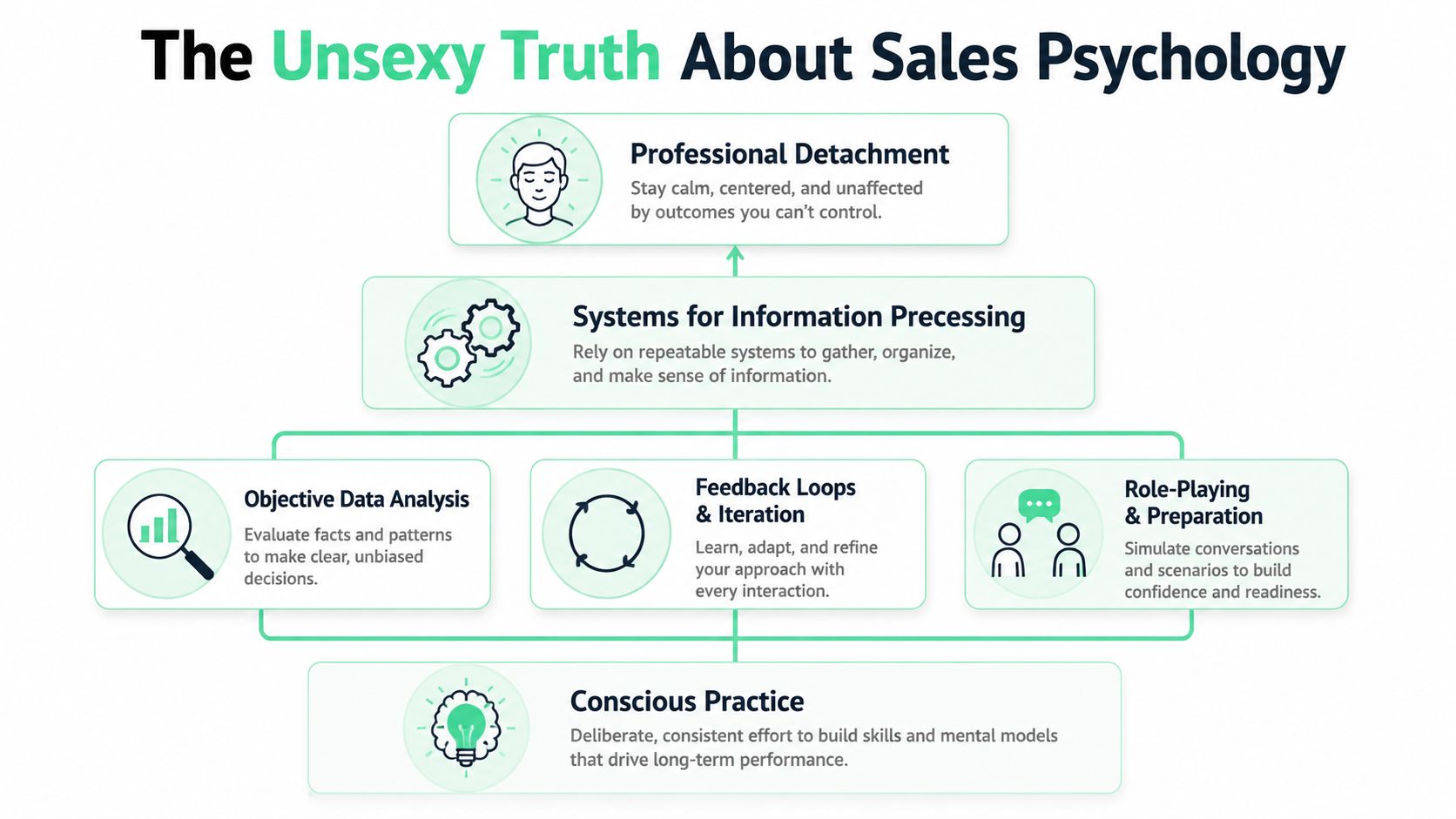
A lot of people hear “detachment” and assume it means becoming robotic. Wrong. It means you stop letting random buyer behavior set your emotional temperature for the day.
That matters because rejection-heavy work is the norm, not some weird phase you'll graduate out of. Research cited in Trusted Advisor content says only 33% of sales reps consistently hit their targets, as noted in The truth about sales rejection, it's not about you. Most reps are operating where stalled deals, missed conversations, and lost opportunities are routine.
If that's the environment, psychology can't just be “stay positive.” That's a poster, not a system.
When a prospect says no, I want reps to classify it before they react.
Not all “no” responses mean the same thing. Some are about timing. Some are about relevance. Some are about price. Some are really “I don't trust that this solves something painful enough.” And some are polite ways of saying, “I was never a fit, and we both should've known that earlier.”
Use a quick diagnostic pass:
That one habit changes the entire emotional experience. You're no longer “getting rejected.” You're processing sales data.
A no without classification is wasted pain.
Bad psychology in sales usually starts with bad scorekeeping.
If a rep measures themselves only by booked meetings or closed revenue, they attach their self-worth to outcomes they only partly control. Buyers ghost. Budgets freeze. Internal priorities change. Procurement appears out of nowhere like a boss battle.
What reps can control is cleaner:
That's the professional version of confidence. Not fake swagger. Not chest-thumping LinkedIn nonsense. Just knowing you ran the play correctly.
The strongest reps I've managed weren't fearless. They were prepared.
They role-played awkward openings. They practiced objection turns until the words felt natural. They reviewed calls and tightened weak spots. That kind of repetition makes rejection sting less because you know what to do next.
And that's what psychology should do in sales. Not make you feel invincible. Make you useful.
The easiest objection to handle is the one you never trigger.
A lot of rejection in sales starts long before the call. It starts with lazy targeting, generic copy, bad timing, and the fantasy that “volume” can rescue sloppy prospecting. It can't. Spray-and-pray is not a strategy. It's just calendar abuse with a CRM attached.
As more B2B selling shifts online, that problem gets worse. Gartner projects that by 2025, 80% of B2B sales interactions between suppliers and buyers will occur in digital channels, which raises the stakes on targeting and signal interpretation according to Indeed's discussion of handling rejection in sales.
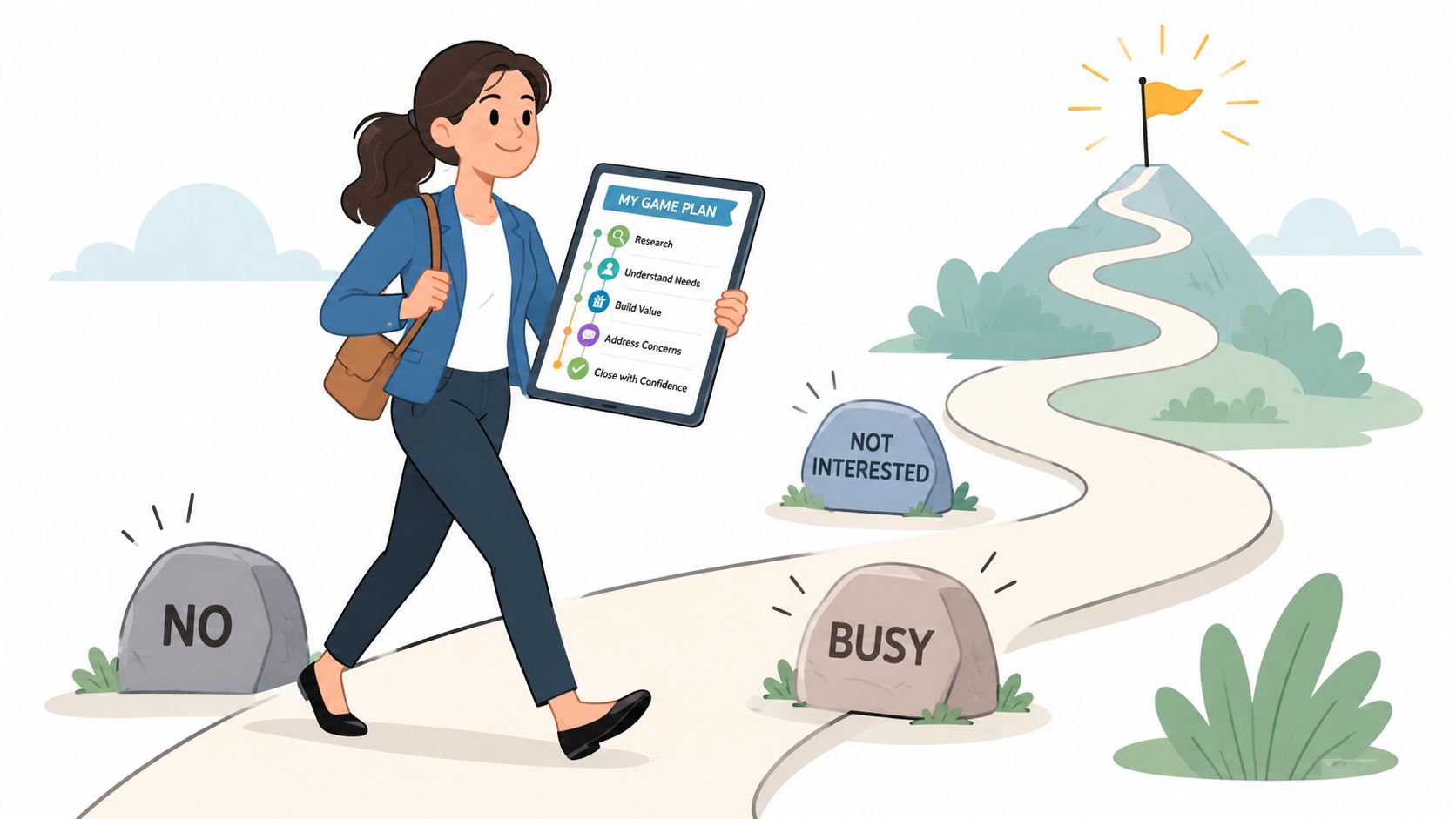
You don't need to write a sonnet about their Series A announcement. You do need to prove you didn't pull their name from a hat.
Good outbound personalization is light, fast, and relevant. I call it minimum viable personalization. Enough context to earn attention. Not so much research that your reps spend half the day playing internet detective.
My basic pre-outreach check looks like this:
That last one saves teams a shocking amount of misery. If the company is obviously too small, too mature, wrong-region, wrong-stack, or wrong buyer, don't “test it anyway.” That's how reps end up chasing ghosts and calling it pipeline creation.
Founders love to talk about efficiency right up until they hand reps a junk list and say, “Just work through it.”
No. Protect rep time aggressively.
A strong outbound motion begins with clear segmentation. If your team still argues daily about the difference between true inbound intent and pure outbound prospecting, fix that first. This breakdown of inbound vs outbound sales is useful because it forces the obvious question: are you contacting people who raised a hand, or are you interrupting people who didn't?
Those require different messaging. Different expectations, too.
Before a rep dials, they should be able to answer a few questions in under two minutes.
| Question | Why it matters |
|---|---|
| Why this company? | Forces relevance |
| Why this person? | Prevents title-based guessing |
| Why now? | Anchors the message in timing |
| What's the likely pain? | Keeps the opener concrete |
| What would disqualify this account? | Stops wasted effort |
This isn't bureaucracy. It's quality control.
The goal of prep isn't to sound impressive. It's to sound accurate.
High activity matters. Undisciplined activity creates fake productivity.
If your reps are hearing the same brush-offs from the same types of prospects, the answer usually isn't “dial harder.” It's “tighten the list, sharpen the angle, and stop leading with something the buyer doesn't care about.”
That's how you sidestep rejection before the call starts. You don't eliminate it. You make sure the no, when it comes, at least belongs to the right conversation.
Some objections are real. Some are stalls. Some are polite exits wrapped in business language.
Your job isn't to overpower all of them. Your job is to identify which one you're hearing, respond like a professional, and decide whether this deal deserves more time. If your team treats every “no” like an invitation to keep pushing forever, congratulations. You've built a harassment engine.
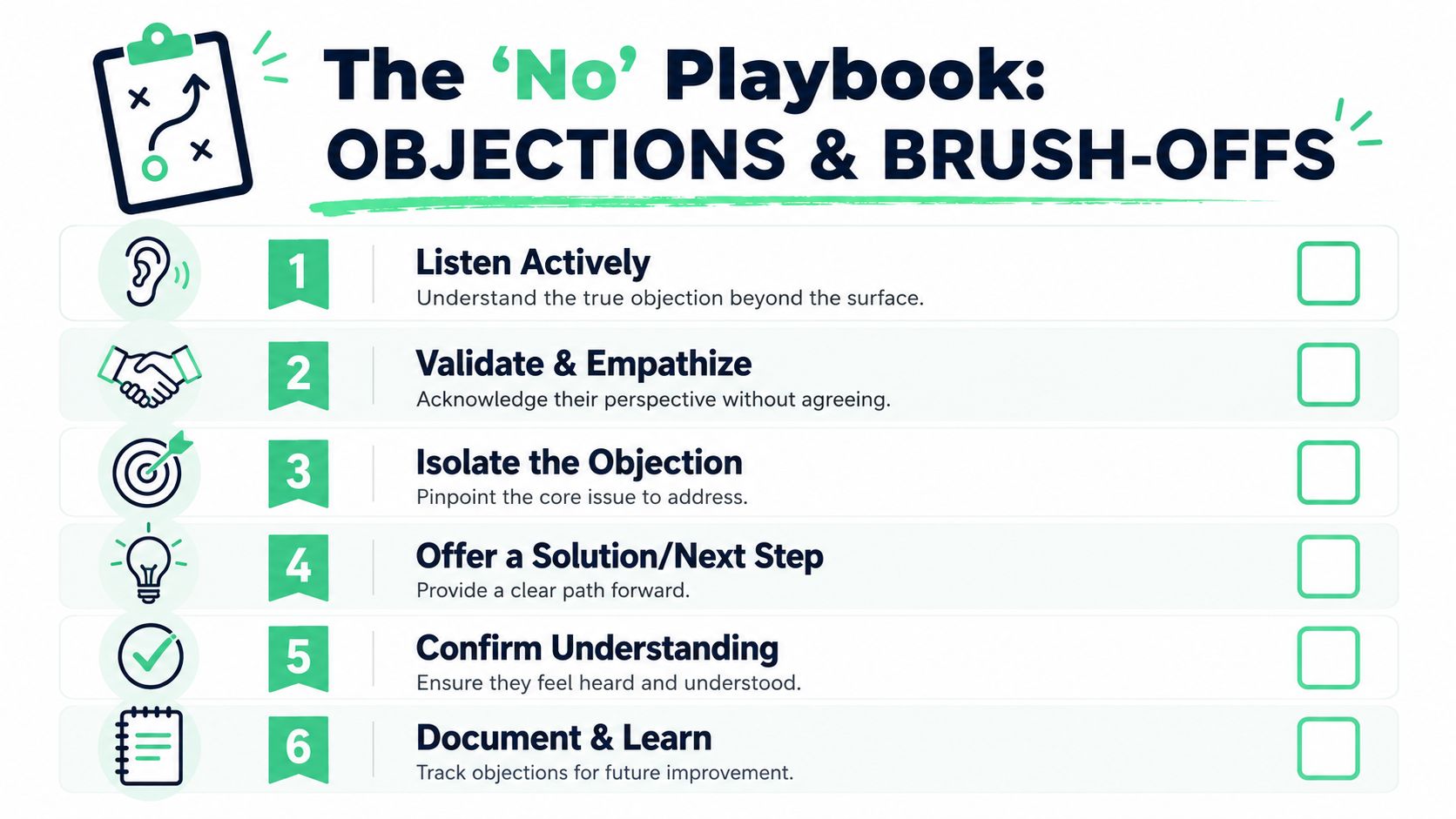
I like a simple pattern for objections: isolate, reframe, resolve.
Isolate means finding the actual problem. “No budget” might mean “not urgent.” “Send me an email” might mean “I don't want this conversation right now.” “Bad timing” might mean “you called the wrong person.”
Reframe means shifting from surface objection to underlying issue. You're not arguing. You're testing whether there's a solvable concern underneath the brush-off.
Resolve means one of two things. Either you set a credible next step, or you end the chase and move on like an adult.
Industry guidance makes this point clearly. Some objections are not recoverable, and continuing to pursue them steals time from better opportunities, as discussed in IndustrySelect's guidance on handling rejection in sales.
Here's how that looks in the wild.
Rep response:
“Got it. When people tell me that, it's usually one of two things. Either the problem isn't urgent enough yet, or there's interest but no path to funding. Which one is closer?”
That question does two things. It lowers friction, and it gets you out of the useless dance where “budget” becomes a shield for every other concern.
If they say there's no urgency, you've learned something. If they say there's interest but no path, now you can talk timing, internal process, or whether to revisit later.
Rep response:
“Fair. Is this a timing issue for this week, or is this just not a priority this quarter?”
That's cleaner than begging for two minutes. It respects the buyer and gives you a real signal. Temporary time crunch? Fine. Structural lack of priority? Also fine. Different follow-up path.
Rep response:
“Happy to. To make it useful, what should I include so it's actually relevant?”
If they engage, there may be life in the conversation. If they stay vague, you probably got the classic brush-off in corporate formalwear.
A lot of reps are taught to persist. Good. Fewer are taught to disqualify. That's a problem.
Use this rough decision guide:
| Signal | What it usually means | Action |
|---|---|---|
| Specific objection | Buyer is thinking | Work it |
| Vague politeness | Buyer wants out | Test once, then move on |
| Concrete future timing | Opportunity delayed | Recycle with date |
| Repeated ambiguity | Low probability | Drop |
The best objection handling isn't clever. It's efficient.
Managers love to preach grit. Fine. But if your entire coaching philosophy is “toughen up,” you're not leading. You're outsourcing your job to motivational clichés.
A resilient sales floor comes from structure. Reps need reps, feedback, pattern recognition, and a system that turns rejection in sales into usable intelligence. Otherwise every loss gets trapped at the individual level, where it becomes either shame or superstition.
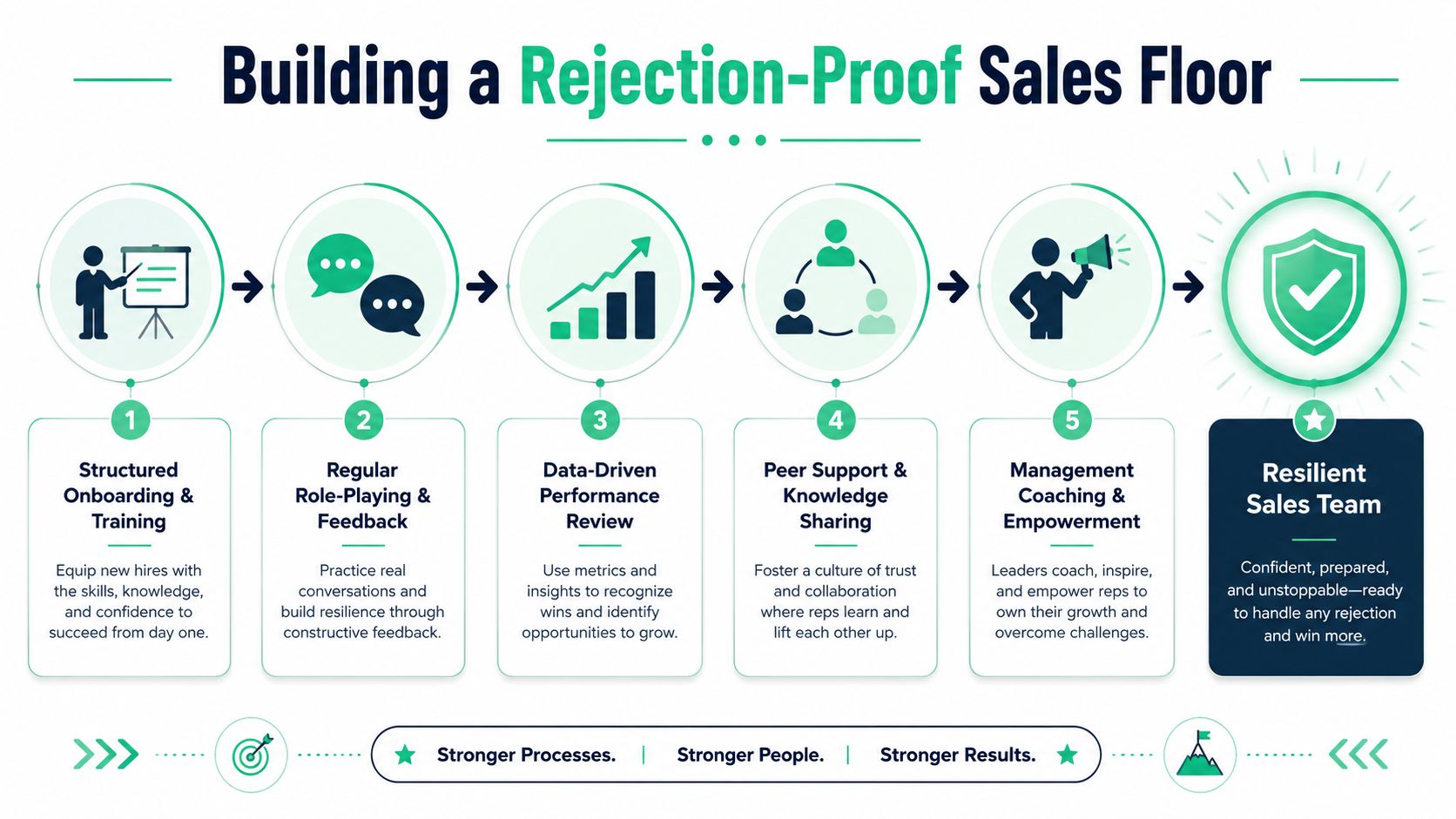
One of the most impactful things a leader can do is force rejection into categories and review those categories regularly. Leaders are advised to document rejection patterns and feed them into pipeline reviews and feedback loops so the team improves future conversion quality, as explained in Superhuman Prospecting's guidance on handling sales rejection.
That means your CRM notes can't read like this:
Those aren't insights. They're verbal packing peanuts.
Use sharper labels tied to action:
Once you collect enough of those, coaching improves. Messaging improves. Even account selection improves. One rep's rough week becomes team learning instead of private suffering.
Managers should review rejection reasons with the same seriousness they review meetings booked.
Bad role-play is painful. Good role-play is one of the fastest ways to reduce emotional overreaction on the floor.
Don't have reps perform polished scripts at each other like middle school theater. Use live scenarios pulled from recent calls. One person plays the prospect. One handles the objection. A third person scores only three things: relevance, clarity, and next-step control.
Keep the format simple:
That's practical coaching. Not performative enablement.
If you only track call volume, you'll get a lot of calls. You may also get a lot of pointless suffering.
I prefer a wider view. Not more complicated. Just more useful.
| What to review | What it tells you |
|---|---|
| Objection categories | Whether the message is landing |
| Follow-up completion | Whether reps quit too early |
| Positive reply themes | Which angles open conversations |
| Disqualification reasons | Whether targeting is sloppy |
| Call review notes | Where individual reps need coaching |
For teams trying to tighten execution, this guide on improving sales productivity is worth a look because productivity isn't just “more activity.” It's higher-quality activity with less waste.
A one-on-one should not feel like a courtroom drama about last week's misses.
Ask better questions:
That keeps the conversation operational. Forward-looking. Useful.
That's the manager's job. Build a floor where rejection creates learning, not dread.
Bad hiring creates fake sales problems.
Leaders blame messaging, tools, and coaching when the underlying issue is simpler. They hired someone who hates the job. Outbound asks for repetition, patience, judgment, and a weird amount of emotional range before lunch. If a candidate hates ambiguity, needs constant novelty, or folds after a week of silence, no script tweak is going to save that hire.
“Years in sales” is one of the laziest filters in recruiting. Plenty of reps built their resume on inbound hand-raisers, cushy territories, founder-led momentum, or one famous logo they have been dining out on for years.
Hire for behavior.
A better screen is a skills-based one. This breakdown of skills-based hiring gets the point right. Focus on what the person can do under normal SDR pressure, not what their LinkedIn headline suggests.
If you want a rejection-proof team, start there. Personal resilience is not a self-help topic. It is a hiring standard.
Throw out the canned interview trivia. “What's your biggest weakness?” tells you nothing except whether the candidate has watched the same interview advice videos as everyone else.
Ask questions that force the candidate to show you how they work:
Good answers sound specific. Weak answers sound polished. There's a difference, and it matters.
The best SDR interview step is still a live exercise.
Give the candidate a basic account. Ask for a cold call opener. Interrupt with a standard brush-off. Coach one adjustment. Then have them run it again.
The second attempt is the interview.
You are not checking whether they can charm a room. You are checking whether they can absorb feedback, stay composed, and make a practical correction without spiraling. That is the job. It also tells you something bigger about your future sales floor. Reps who can recover in an interview can usually recover in production. Reps who get defensive in a mock call will turn every coaching session into theater.
Hiring filter: Change one variable mid-interview and watch the response.
If they improve on the next rep, keep talking. If they ramble, argue, or repeat the same weak move with more volume, cut bait.
Outbound rewards consistency more than charisma. It punishes fragile egos, sloppy follow-up, and people who need constant external validation to send the next email.
So build your hiring process around resilience, coachability, and process discipline. Then train managers to reinforce those traits once the rep joins. That is how individual grit turns into team-wide execution. The reps handle rejection better because the system was built for it, the managers coach it, and the hiring loop keeps selecting for it.
If your team does not have the time, patience, or recruiting muscle to screen SDR talent at that level, hireSDR.io was built to solve that bottleneck. We help founders and revenue leaders find pre-vetted SDRs and BDRs without turning hiring into a second full-time job.
Your reps are busy all day, your CRM is full of “activity,” and somehow pipeline still feels anemic. Founders see that and reach for the...

Stop hiring “sales ninjas” and start building a real team. You need to hire a salesperson. Sounds simple until the applicants start calling themselves Growth...

You're probably doing the math right now. You want an SDR. You've got a salary number in your head. Maybe you've even built a neat...

Tell us who you need. We'll have pre-vetted candidates in your inbox within 72 hours. No commitment until you hire.