
Monday morning. Forecast call. Half the deals in CRM still say “proposal sent,” nobody can explain what happened after the last demo, and your top rep swears three deals are “close” because the buyer “sounds interested.”
Sounds familiar?
That forecast isn't a forecast. It's fan fiction with dropdown menus.
I've seen this movie too many times in startups. Founder sells the first batch of customers through sheer force of will. Then a few reps get hired. Then the CRM fills up with activity masquerading as progress. Then everyone starts using words like “momentum” while the board asks why the number moved backward. Toot, toot.
Pipeline management is the discipline that stops that nonsense. Not the cosmetic version where someone cleans up fields before the board meeting. The effective version. The one that tells you which deals are real, which reps are sandbagging, where buyers are getting stuck, and whether your revenue plan has any relationship to reality.
You know the meeting.
A rep says, “This one should close this month.” You ask why. They mention a good call, a positive reply, maybe a champion who “really gets it.” You ask about decision criteria, procurement steps, or a committed next meeting with the buyer group. Silence. Someone starts talking about vibes.
That's not a pipeline issue in the abstract. That's a leadership problem with a revenue-shaped price tag.
Most bad forecast reviews have the same ingredients:
If you're trying to improve predicting future sales, start with the ugly truth. Forecasting doesn't break because your spreadsheet is ugly. It breaks because the underlying pipeline is dishonest.
Your CRM will always tell the truth eventually. The problem is that many teams force it to lie first.
Bad pipeline management doesn't just create awkward meetings. It wrecks hiring plans, marketing spend, cash planning, and founder credibility. You over-hire because fake pipeline suggests future bookings. Or you under-react because stalled deals still look alive in stage three like zombies in branded polo shirts.
I'm opinionated on this because I've watched teams burn months fixing the wrong problem. They thought they needed more leads. They needed fewer fantasy opportunities and sharper qualification. They thought the issue was tooling. It was process discipline and rep judgment.
That's the good news, by the way. Pipeline chaos is fixable. You don't need a bigger CRM. You need a stricter operating system.
A pipeline isn't a scrapbook of everyone your team ever emailed. It isn't a monument to effort. And it definitely isn't the place where “maybe” goes to die slowly.
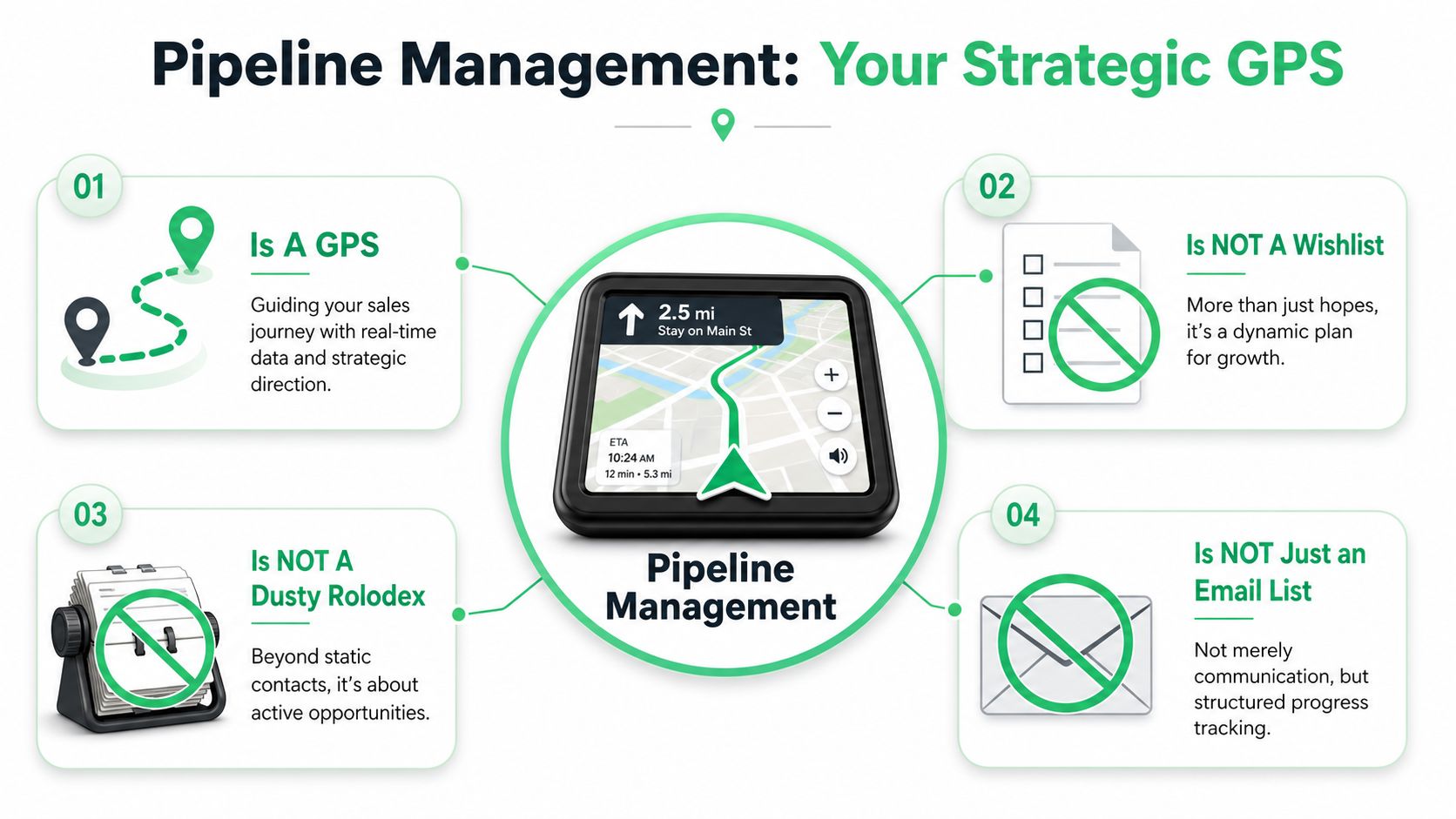
A good pipeline is a navigation system. It tells you where each opportunity is, what has to happen next, and whether your team is heading toward revenue or just driving in circles.
Let's clear out the junk first.
That's why most guides on effective sales pipeline management become useless the minute you enter a real startup. They often describe ideal CRM hygiene while your reps are juggling inbound, outbound, no-show reschedules, and a founder asking for “just one more push” on a dead account.
Real pipeline management does three jobs at once:
This is the key mindset shift. Pipeline stages should reflect buyer readiness, not seller effort. If the buyer hasn't made a decision, confirmed a need, agreed on criteria, or committed to the next step, then nothing meaningful happened. Your rep was busy. Busy is not the same as advancing.
Practical rule: If a stage change can happen without the buyer doing anything, the stage is probably wrong.
Think about driving with GPS. It updates based on real conditions, not your optimism. It reroutes when traffic appears. It doesn't say, “You're basically there because you had a good feeling near the highway.”
That's pipeline management.
A clean pipeline tells you where deals slow down, which route is blocked, and whether you have enough fuel to hit the number. A wishlist just tells you what your team hopes happens before month-end. Hope is useful in religion. It's terrible in forecasting.
Most startup pipelines have too many stages because leaders confuse visibility with control. They add “demo booked,” “demo completed,” “follow-up sent,” “internal review,” “proposal drafted,” and twelve other administrative pit stops. The result is a pipeline that looks detailed and tells you almost nothing.
The fix is boring and brutal. Use fewer stages.
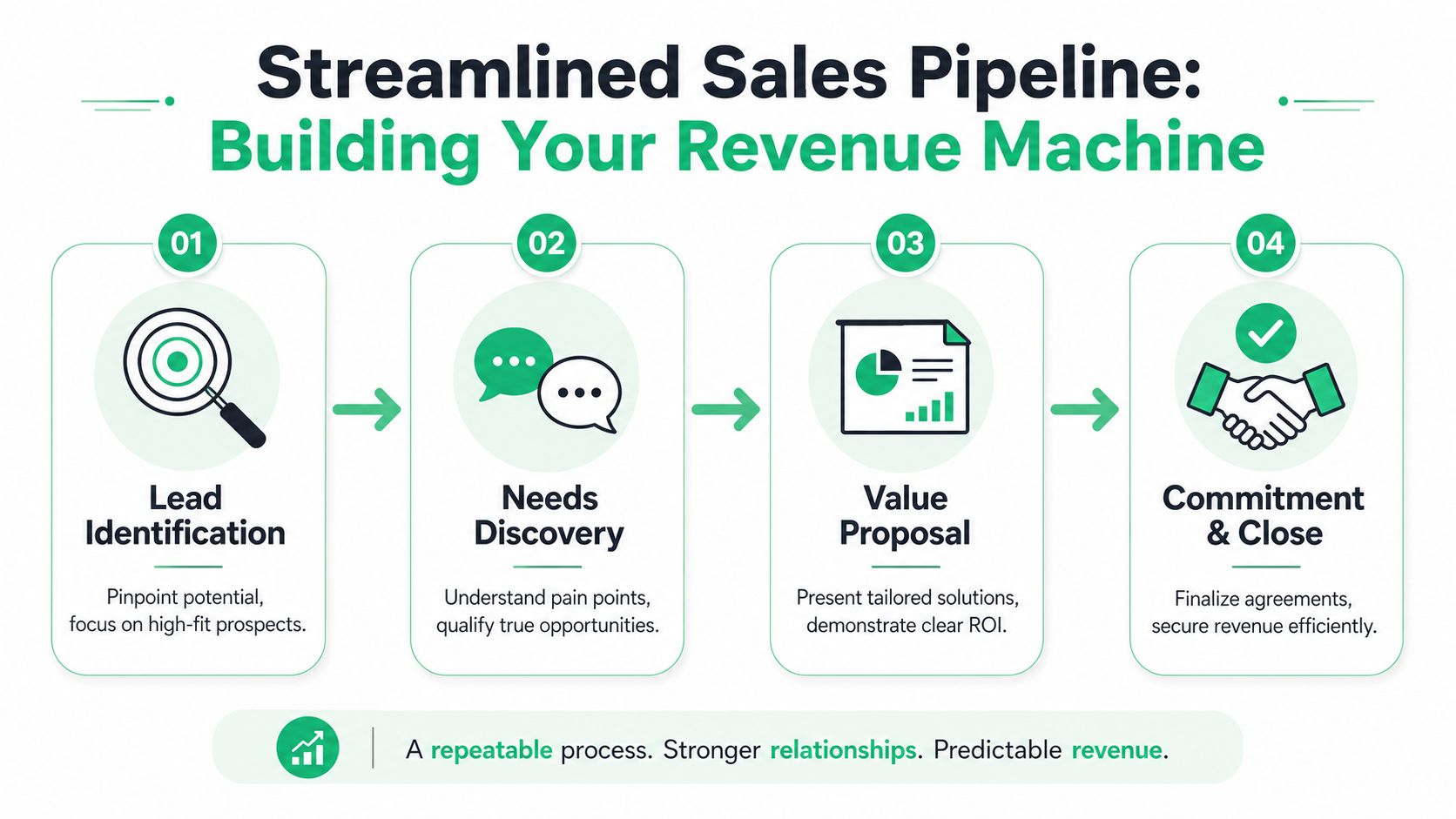
According to this HubSpot community best-practice discussion, pipeline management requires a maximum of six stages, where each stage represents a specific decision point rather than a routine activity; if a stage lacks defined exit criteria that can be written in one sentence, it belongs in an activity log, not the pipeline.
That's exactly right.
If you need nine stages to explain your sales process, your sales process is doing too much explaining.
Use a simple structure built around decision points:
You can rename them. Don't get cute.
What matters is that each stage marks a real shift in buyer commitment. Not your rep's calendar. Not whether a deck was sent. Not whether someone said “circle back next month.”
Many teams fall apart because they define stages, but they don't define what gets a deal into or out of them.
Here's the standard I use:
Notice what's missing. “Demo delivered.” “Follow-up sent.” “Proposal shared.” Those are activities. Important activities, sure. But activities belong in task management, not in your core revenue map.
Founders love volume because volume feels like safety. It isn't. A stuffed pipeline with weak qualification is like a pantry full of condiments and no actual food. Looks abundant. Dinner's still a disaster.
Your SDR and AE handoff needs strict entry rules. If your team is still debating which framework fits best, go compare sales qualification frameworks and choose one that your managers can coach consistently. The framework matters less than your willingness to enforce it.
Here's my blunt recommendation:
If a manager can't audit a stage transition in under a minute, the process is too loose.
A lean pipeline is easier to coach, easier to forecast, and harder to game. That's why it works.
Everybody loves redesigning the pipeline. Almost nobody loves maintaining it.
That's why pipelines rot.

The ugly truth is that dirty data usually isn't a software problem. It's a behavior problem wearing a software costume. As noted by Salesforce on sales pipeline management, 73% of stale pipeline entries stem from reps failing to update close dates or next steps weekly, not system flaws, yet only 28% of sales teams enforce a "hygiene ritual" with accountability.
There it is. Most pipeline decay comes from humans avoiding small maintenance tasks until they become large credibility problems.
I don't care how polished your CRM is. If reps don't update next steps and close dates every week, your forecast will drift into nonsense again.
The fix is simple and repetitive:
That routine feels small. It isn't. It's the difference between operating a sales team and managing a rumor mill.
Yes, automation helps. Calendar sync, email capture, and CRM reminders are useful. I like all of them. But too many teams buy tooling to avoid manager discipline.
Bad idea.
A leader should inspect a rep's pipeline the same way a chef checks a station before dinner service. Clean surface. Clear prep. No mystery containers in the back. If a deal has no next step, no recent buyer action, and a stale date, it shouldn't survive review just because the rep is likable.
Clean data is not the goal. Trusted data is the goal.
Here's the cadence I'd put in place tomorrow:
| Day | Focus | What must happen |
|---|---|---|
| Monday | Forecast review | Commit on real deals only |
| Wednesday | Manager inspection | Review slippage, missing next steps, aging deals |
| Friday | Rep hygiene ritual | Update dates, log next steps, remove junk |
And a few essential requirements:
Pipeline hygiene isn't glamorous. Neither is brushing your teeth. Skip both long enough and the bill gets expensive.
Sales teams love dashboard confetti. Twenty charts. Rainbow funnels. Trend lines nobody acts on. It looks impressive right up until the quarter misses and everyone squints at the same graph like it owes them an apology.
You need fewer metrics. The ones that tell you whether revenue is buildable.
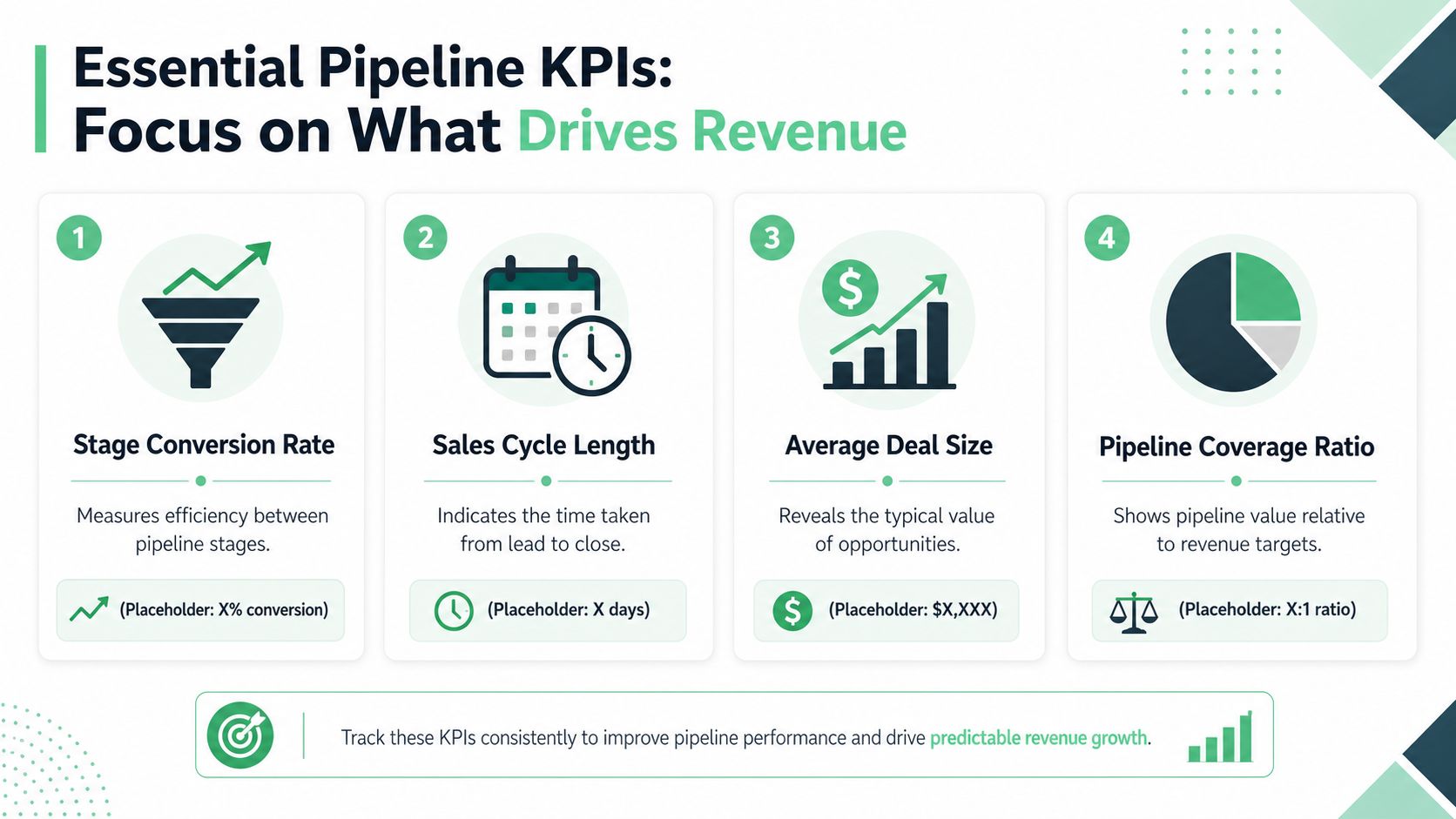
The first point is essential. According to monday.com's pipeline management guide, a healthy pipeline coverage ratio must sit between 3x and 5x total open opportunity value against quota. Below that, you're starving the quarter. Above that, you may be carrying too much junk or moving too slowly.
| Metric | What It Measures | Healthy Benchmark (SaaS) |
|---|---|---|
| Pipeline coverage ratio | Open opportunity value against quota | 3x to 5x |
| Pipeline-to-bookings ratio | Whether pipeline generation can support bookings | 3x to 4x |
| Deal velocity | How quickly opportunities move through stages | Faster is healthier |
| Win rate | How efficiently qualified deals turn into revenue | Higher is healthier |
That's the shortlist. Not because other metrics are useless, but because these four tell you where to look next.
Pipeline coverage ratio tells you whether the quarter has enough oxygen. If you're below range, you likely have a generation problem. If you're bloated far above range, the issue may be qualification or stage discipline.
Pipeline-to-bookings ratio helps answer a tougher question. Is current top-of-funnel creation strong enough to produce the bookings plan, or are you setting your SDR team up to fail? With this ratio, sales and marketing stop pointing fingers and start doing math.
Deal velocity exposes clogging. Slow deals create false comfort because they remain visible in late stages while contributing nothing but anxiety. You don't need a heroic rep speech. You need to know why buyers aren't moving.
Win rate is your quality check. If coverage looks healthy but bookings still disappoint, weak win rate usually means the team is filling the pipe with bad-fit opportunities or losing control during evaluation.
For leaders trying to tie sales efficiency to broader budget decisions, this perspective on optimizing marketing spend for revenue is useful because it forces the same discipline on demand generation that pipeline management should already impose on sales.
Metrics aren't just for board slides. They should change rep behavior. If pipeline coverage is weak, SDR activity and qualification quality need scrutiny. If velocity is poor, AE follow-through and buyer orchestration need coaching. If productivity is the issue, get practical about how to improve sales productivity before you throw headcount at the problem.
One more opinion. A giant pipeline is not a flex. It's often a confession.
Here's where founders get this wrong. They treat pipeline management like a RevOps cleanup project, then wonder why the mess comes back by next sprint.
Your pipeline quality starts with SDR behavior.
If SDRs create weak opportunities, AEs waste time. If SDRs log vague notes, managers can't coach. If SDRs pass deals without real qualification, your forecast gets poisoned at the source. This is why pipeline management is fundamentally a people-and-process system, not just a CRM admin task.
Your SDR playbook should make stage entry painfully clear.
Not aspirational. Clear.
I'd include rules like these:
The handoff should feel like passing a baton, not tossing a live grenade.
High-growth SaaS companies must maintain a 3–4X pipeline-to-bookings ratio to win consistently, according to Blue Ridge Partners. That metric matters because it puts pressure where it belongs. On whether your front-end engine is creating enough real opportunities to support revenue before the quarter ends.
That's why SDR structure matters so much:
Different motions. Same rule. No fake opportunities.
If I were onboarding SDRs tomorrow, I'd train these habits before clever objection handling:
You can coach scripting later. First, coach judgment.
Hire for discipline, not just charisma. Charm creates meetings. Discipline creates pipeline you can trust.
And yes, talent quality changes everything. Leaders who need to Hire SDRs should care less about whether a candidate sounds polished in an interview and more about whether they can follow qualification rules, keep records clean, and protect the pipe from junk. The flashy rep who pollutes your CRM is expensive. The disciplined rep who says “this isn't qualified yet” is gold.
Once the machine works, the next mistake is obvious. You decide to grow faster and assume the answer is hiring more reps immediately.
Sometimes it is. Often it isn't.
If your pipeline management is weak, adding headcount just gives you a larger, louder mess. More meetings get booked. More junk enters the CRM. More “late-stage” deals appear. Then finance asks why pipeline grew while bookings did not. Hope you enjoy forensic archaeology in Salesforce.
Teams often obsess over wins and barely study losses. That's lazy.
According to GetAccept's sales pipeline management article, 68% of lost deals in SaaS are due to unresolved fit mismatches or stalled engagement, not just budget constraints. That matters because “no budget” is often the polite bedtime story reps tell themselves after a bad qualification call.
A proper lost-deal pipeline should track:
If you don't track losses with the same seriousness as open opportunities, you'll repeat the same mistakes with better branding.
The best scaling move isn't “hire more.” It's “hire into a system that already tells the truth.”
That means:
Then add talent.
That's how you scale without mortgaging your office ping-pong table, your founder sanity, or your credibility with the board. You don't need a heroic quarter. You need a repeatable one.
Pipeline management done right gives you something rare in startup land. Calm. Not because sales gets easier, but because the chaos becomes diagnosable. You can see what broke, who needs coaching, where the buyer journey stalls, and whether your hiring plan matches your revenue ambition.
That's the whole game. Process plus people. Clean pipe, sharp reps, honest data.
Then the forecast stops reading like fiction.
If you need SDRs who can execute a disciplined pipeline process from day one, hireSDR.io is built for exactly that. They help founders and revenue leaders hire pre-vetted SDR and BDR talent fast, with global coverage, flexible engagement options, and screening built around the skills that protect pipeline quality. If your current team is spending more time cleaning CRM junk than creating real opportunities, it's probably time to fix the talent layer too.

You probably know this scene a little too well. Your CRM says the quarter looks alive. Your SDRs are booking meetings. Your AE says there's...

Your best Account Executive is doing detective work in Apollo, cleaning CSVs, and chasing no-shows instead of closing. Your pipeline has activity, sure, but the...

Your pipeline is thin. Your founders' calendar has awkward white space. Your reps are “working the list,” which usually means clicking around the CRM and...

Tell us who you need. We'll have pre-vetted candidates in your inbox within 72 hours. No commitment until you hire.