
The most popular advice on sales compensation plans is also the most damaging. Founders grab a “proven SaaS comp template,” swap in their logo, and call it strategy. Then they wonder why reps chase the wrong behavior, managers spend Fridays explaining commission math, and payroll feels like a hostage negotiation.
A comp plan isn't a document. It's your revenue operating system. If you copy one built for a giant enterprise with layers of RevOps, regional legal teams, and a bench of replacement reps, you're importing someone else's problems into a lean company that can't afford them.
That gets worse when you hire remote SDRs. Cross-border pay, different labor expectations, and fuzzy ownership between SDRs and AEs expose every weak assumption fast. The usual enterprise playbook ignores that. It assumes role clarity, stable markets, and enough admin overhead to patch a bad plan after launch. Most startups have none of that.
The first mistake is treating sales compensation plans like HR paperwork. They're not. They're a set of incentives that tell your team what matters, regardless of what your slide deck says in the all-hands.
If your comp plan rewards volume, reps will produce volume. Bad meetings, junk pipeline, fake urgency, calendar confetti. If it rewards the wrong stage of the funnel, your team will optimize for that stage and dump the mess on someone else. Then leadership acts shocked. Toot, toot.
Generic templates fail because they flatten context. A startup trying to prove outbound in two markets should not use the same logic as a mature SaaS company protecting a giant installed base. Yet that's exactly what founders do when they copy whatever looked polished on LinkedIn.
Common symptoms show up quickly:
Treeline makes the simplicity point brutally clear. Organizations that limit performance metrics to two to four per role see stronger engagement because ambiguity and too many variables demotivate reps, according to Treeline's sales comp guidance.
Your reps shouldn't need a decoder ring to understand payday.
Lean teams don't have room for elegant theory. One bad comp plan can create three expensive problems at once: weak pipeline, rep turnover, and founder time disappearing into compensation disputes.
The nastiest part is that broken plans often look fine on paper. They blow up in motion. Especially with remote SDR teams, where handoffs, timezone overlap, and manager visibility already need extra discipline, a muddy plan creates chaos fast.
Here's my bias. If a plan can't be explained in one short conversation and audited without drama, it's probably built to fail.
Before you debate commission rates, answer one question. What behavior creates the most value for your business right now?
Not eventually. Not in a glorious Series C future. Right now.
If you need net-new pipeline, pay for pipeline creation. If you need cleaner expansion motion, reward expansion behavior. If your remote SDR team exists to generate qualified meetings for AEs, don't pretend they own closed revenue just because it sounds more “aligned.”
Here's the simplest way to think about sales compensation plans. They are code. You write instructions into paychecks, and your team runs that code every day.
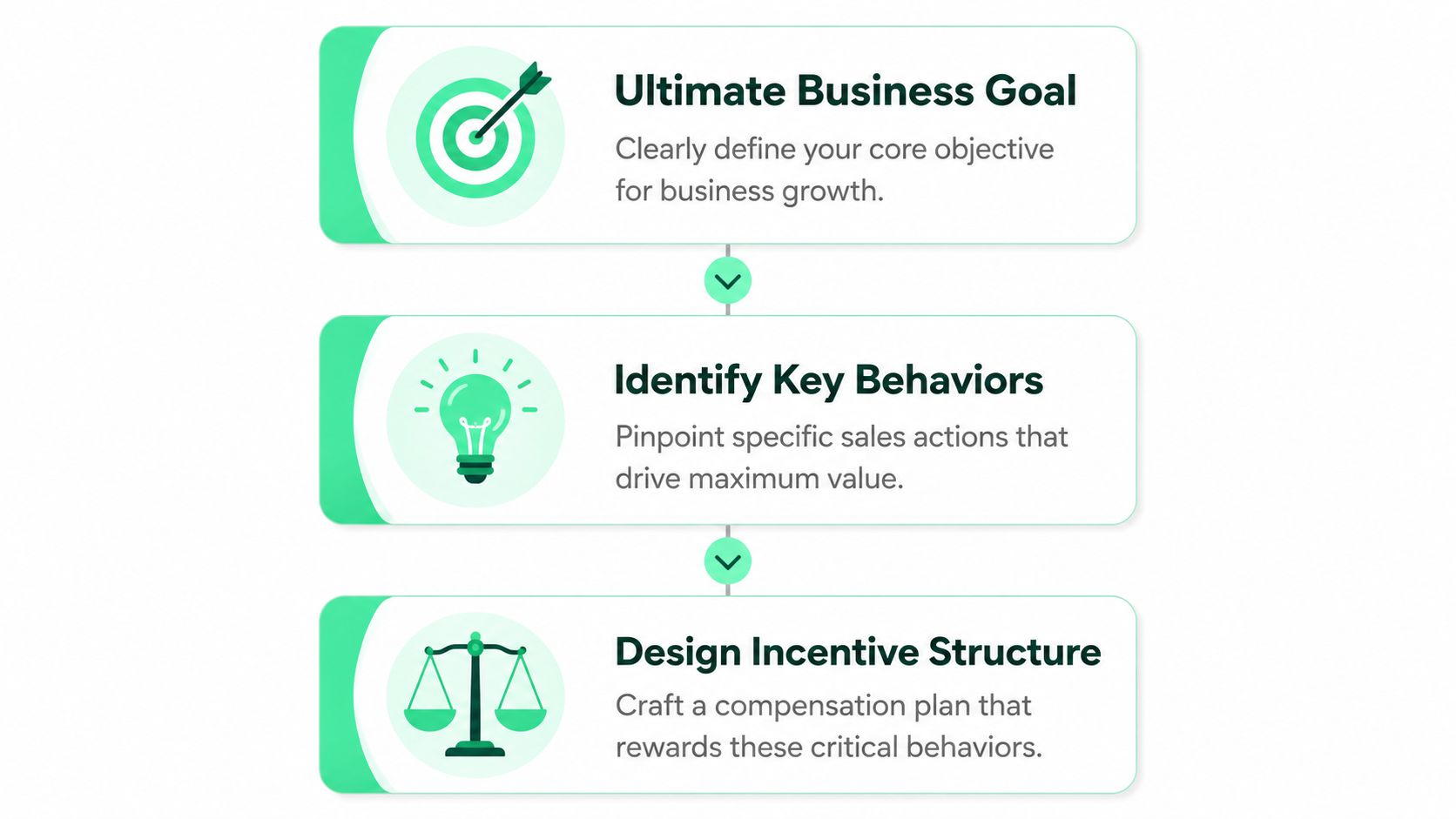
Most founders start with budget. Wrong starting point. Start with the company objective, then work backward into pay design.
A useful sequence looks like this:
That's the only order that works. Reverse it, and you'll end up retrofitting business logic onto a comp plan that already points people in the wrong direction.
For lean startups hiring across borders, base pay does more than cover rent. It reduces fear. Fearful reps protect themselves. They hoard deals, sandbag updates, or optimize for whatever gets them paid fastest.
Variable pay should create urgency without creating nonsense. In SaaS, the average base commission rate for sales roles is about 10% of annual contract value, and top performers often earn 1.5x to 2x accelerators after hitting 120% of quota, according to Everstage's sales compensation statistics. That's useful as a benchmark, not a religion.
Practical rule: Benchmark externally, but design internally. Your market tells you what's competitive. Your business tells you what should be rewarded.
A lot of startup comp plans pay for visible effort because visible effort feels reassuring. Calls made. Emails sent. Sequences completed. That's management comfort food.
Real pay design asks a harder question. Which actions move revenue forward?
For modern remote teams, that usually means stripping the plan down and tying variable pay to a handful of behaviors that matter most. Not everything measurable deserves money attached to it. If it did, your reps would get paid for logging into Slack.
A good plan feels directional. Reps know what to do more of tomorrow. Managers know what to coach. Finance knows what it's buying. That's alignment.
Paying SDRs and AEs on the same logic is a rookie mistake. They don't own the same part of the funnel. They don't control the same outcomes. They shouldn't live under the same incentives.
An SDR creates qualified pipeline. An AE converts qualified pipeline into revenue. When you blur that line, everybody starts pointing at everybody else.
For SDR roles, the standard pay mix is 65% base salary and 35% variable compensation, according to Qobra's SaaS sales compensation template. I'd treat that as the default unless you have a very good reason not to.
Why so much base for SDRs? Because early-funnel work is noisy. A remote SDR can execute well and still deal with bad lead lists, weak positioning, a messy CRM, or an AE who treats follow-up like an optional hobby. Heavy variable pay in that environment doesn't create accountability. It creates resentment.
AEs are different. They control later-stage outcomes more directly, so tying more of their pay to revenue makes sense. Their plan should revolve around closing the right business, not gaming meeting counts.
| Factor | SDR (Sales Development Rep) | AE (Account Executive) |
|---|---|---|
| Core job | Create qualified pipeline | Close qualified pipeline |
| Best pay logic | Higher stability with focused variable | Stronger link to revenue outcomes |
| Recommended primary metrics | Meetings booked, leads qualified, meeting quality | Closed revenue, new logos, expansion if owned |
| Main risk if mispaid | Activity theater | Discounting and bad-fit deals |
| Bad plan smell | Paid on revenue they don't control | Paid on top-of-funnel activity they don't own |
If you're pressure-testing AE comp against current 2026 sales executive pay benchmarks, compare total cash logic by role, not just salary lines. That's where founders usually fool themselves.
Yes, I know why people do it. It sounds clean. “Let's align everyone to revenue.” Nice sentence. Bad operating model.
When an SDR is paid on closed deals, three ugly things happen:
There's also a deeper issue. Existing guidance rarely deals with SDR-specific incentive design, and too many teams still overweight activity over outcomes. A more useful SDR plan shifts more incentive toward meeting quality and sales-readiness, not just raw activity, as discussed in AJG's piece on compensation pitfalls.
If your SDR comp plan rewards dials more than useful meetings, don't complain when you get a pipeline full of ghosts.
For SDRs, keep it tight. Focus on outputs they influence directly, especially qualified meetings and quality signals tied to downstream usefulness.
For AEs, pay on revenue outcomes and deal quality. Their comp should reward closing, not outsourcing discipline problems to the top of funnel.
This sounds obvious. It isn't. Plenty of teams still run both roles through the same compensation blender and act surprised when the result tastes awful.
Bad comp plans rarely fail because the commission rate is off by a point or two. They fail because the rules are fuzzy, political, or detached from how the team sells.
That problem gets worse in lean startups with remote reps. A founder in New York sets a heroic quota for an SDR in Bogotá, an AE in London inherits a territory with zero history, and finance still expects the plan to behave like a mature enterprise model. It won't. If you want a plan people trust, write rules that survive real operating conditions, not boardroom optimism.
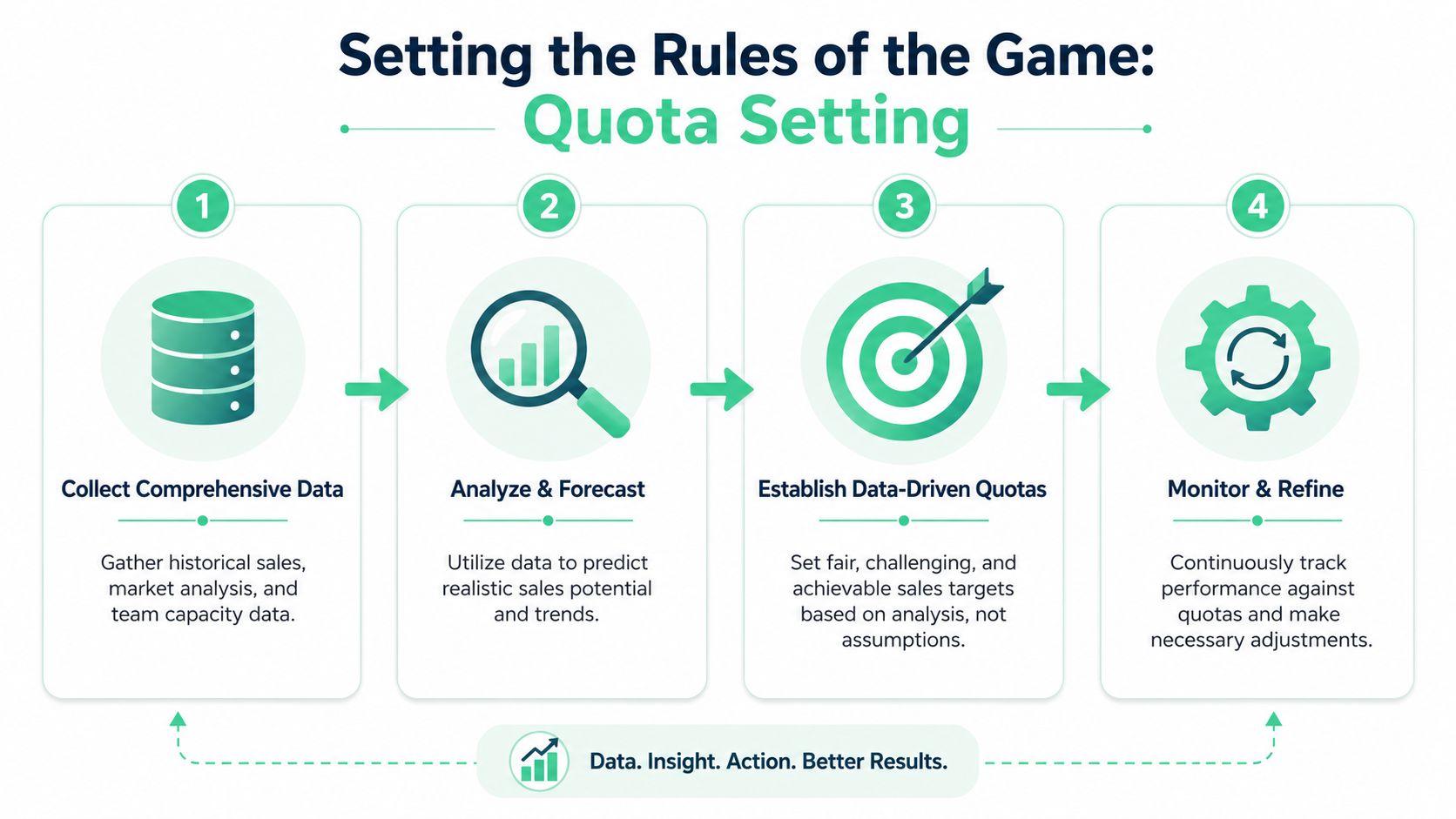
A quota is a management promise. You are telling the rep, “Hit this, and the plan pays the way we said it would.” If the number is fantasy, trust is gone on day one.
Use evidence you already have. Look at historical attainment by segment, territory capacity, average sales cycle, and how long it takes a new remote rep to get fully effective inside your systems and process. Then adjust for what changed. New pricing, a weaker market, a better product, a narrower ICP. All of it matters.
Three questions keep quotas honest:
If you cannot answer those clearly, you are guessing.
Ramp should not be a vague grace period. It should be a written schedule with reduced targets, milestone dates, and payout rules nobody needs to debate later.
For remote SDRs, that matters even more. They are learning the pitch, the tools, your qualification standard, timezone handoffs, and the unwritten process gaps every startup pretends do not exist. A real ramp protects good hires from getting labeled as weak before they have a fair shot.
A simple ramp plan should spell out:
That last point gets ignored constantly. If your team takes three weeks to ship access, finalize territory, or train the rep, the company caused the miss. Do not dump that cost onto the rep and call it accountability.
Accelerators should reward output that improves the business, not create a sugar high around sloppy volume.
For AEs, that usually means better rates above quota. For SDRs, be careful. If you pay a bigger bonus for raw meeting count without any quality threshold, remote reps will flood calendars with junk and blame handoff friction later. Tie accelerators to outcomes that hold up after inspection, such as qualified meetings held, accepted pipeline, or opportunities that survive a set stage threshold.
Keep the rule simple enough that a rep can calculate earnings in their head. Complexity is not sophistication. It is usually a cover for avoiding hard choices.
If you want short-term pushes on a narrow objective, use SPIFFs sparingly and keep them separate from the core plan. This guide on optimizing sales spiff strategies is a useful reference if you need ideas without turning the whole comp model into a monthly side quest.
Underperformance needs consequences. Full commission for half the result teaches the wrong lesson. But blunt decelerators can also push reps into desperate behavior, especially near the end of a quarter.
Set a clear floor for payout. Then pair it with equally clear quality protections. For example, if an SDR books meetings that no-show, get disqualified immediately, or fail basic acceptance criteria, those should not pay like clean pipeline creation. For AEs, clawback rules on churned deals or unpaid invoices can make sense, but only if the rep could reasonably control what happened.
Write the rule in plain English. If legal or finance needs a decoder ring to explain it, reps will assume the company plans to use it against them.
Comp disputes usually start in the gray areas. Split credit. Territory changes. Leaves of absence. Manager overrides. Cross-border payment timing. Currency conversion. Approved exceptions that somehow only show up for favored reps.
Put those rules in writing before the quarter starts. That is not bureaucracy. That is self-defense.
For distributed teams, include the payment mechanics too. Spell out payout currency, conversion method, payment timing, contractor versus employee treatment, and who owns compliance review. If you are hiring across countries, your comp plan and global payroll compliance process need to match. Otherwise, a clean incentive plan on paper turns into a messy payout experience in real life.
| Mechanic | What it does | What it signals |
|---|---|---|
| Quota | Sets the target | “This is the standard” |
| Ramp | Adjusts early expectations | “We pay for real progress” |
| Accelerator | Rewards high attainment | “Extra output earns extra pay” |
| Decelerator | Reduces payout for weak attainment | “Low performance does not get premium rates” |
| Edge-case rules | Prevents payout disputes | “The company will not improvise after the fact” |
Clear rules make comp boring in the best possible way. Reps know how to win. Managers spend less time in arbitration. Finance stops getting surprise exceptions at quarter end. That is what a good plan should do.
SPIFFs are candy. Fun, energizing, and dangerous if you make them the meal.
Used well, they create a short-term push around one narrow goal. Used badly, they distract reps from the actual plan, create fairness complaints, and leave finance cleaning up the wrappers. That's especially true when your team is spread across countries and your payment processes already have enough moving parts.

Founders love turning SPIFFs into miniature casinos. Don't.
The best ones are simple, temporary, and tightly scoped. If you want ideas for structuring them without making your main plan unrecognizable, this guide on optimizing sales spiff strategies is worth a look.
Above all, keep your main plan clean. Treeline's guidance is useful here: organizations that limit metrics to two to four per role and reduce plan complexity drive better engagement, as noted earlier. That applies doubly when you layer on SPIFFs. If your reps need a FAQ page just to understand this month's incentive, you already lost.
Hiring a great SDR in another country is the easy part. Paying them correctly, consistently, and compliantly is where the swagger usually disappears.
A lot of founders think they can patch this with spreadsheets, contractor templates, and “we'll sort it out later.” Then they run into local rules, classification issues, currency headaches, payout timing, and plan language that made sense in one country but not another.
Here's the cynical truth. Most companies don't have a compensation problem. They have an operations problem wearing a compensation hat.
A cross-border comp plan has to answer practical questions:
If those answers vary by manager, country, or month, reps stop trusting the system.
This isn't glamorous work. It is expensive when ignored.
Remote teams need plan language that legal, finance, and managers can all enforce consistently. You also need a payment infrastructure that won't force your team into endless manual exception handling. If you're hiring across markets, getting serious about global payroll compliance is less about bureaucracy and more about not creating self-inflicted risk.
A rep can tolerate a tough plan. They won't tolerate a vague one that pays unpredictably.
Keep the core plan simple. Use SPIFFs sparingly. Treat cross-border pay like an operating discipline, not an admin footnote. That's how grown-up companies scale remote SDR teams without turning payroll day into a scavenger hunt.
Founders love to debate commission percentages. That is rarely the part that breaks.
What breaks is weaker leadership behavior. Teams cling to an old plan because rewriting it is annoying. They keep activity metrics long after the business needs revenue. Then finance panics when one rep has a big month and suddenly wants to rewrite the rules after the quarter already started. That is how you train a sales team to distrust management.
For lean startups with remote SDRs, the mistakes get more expensive. A bloated enterprise plan is already hard to manage. Add cross-border payroll, contractor arrangements, time zones, and role confusion between SDRs and AEs, and a mediocre plan turns into daily operational drag.
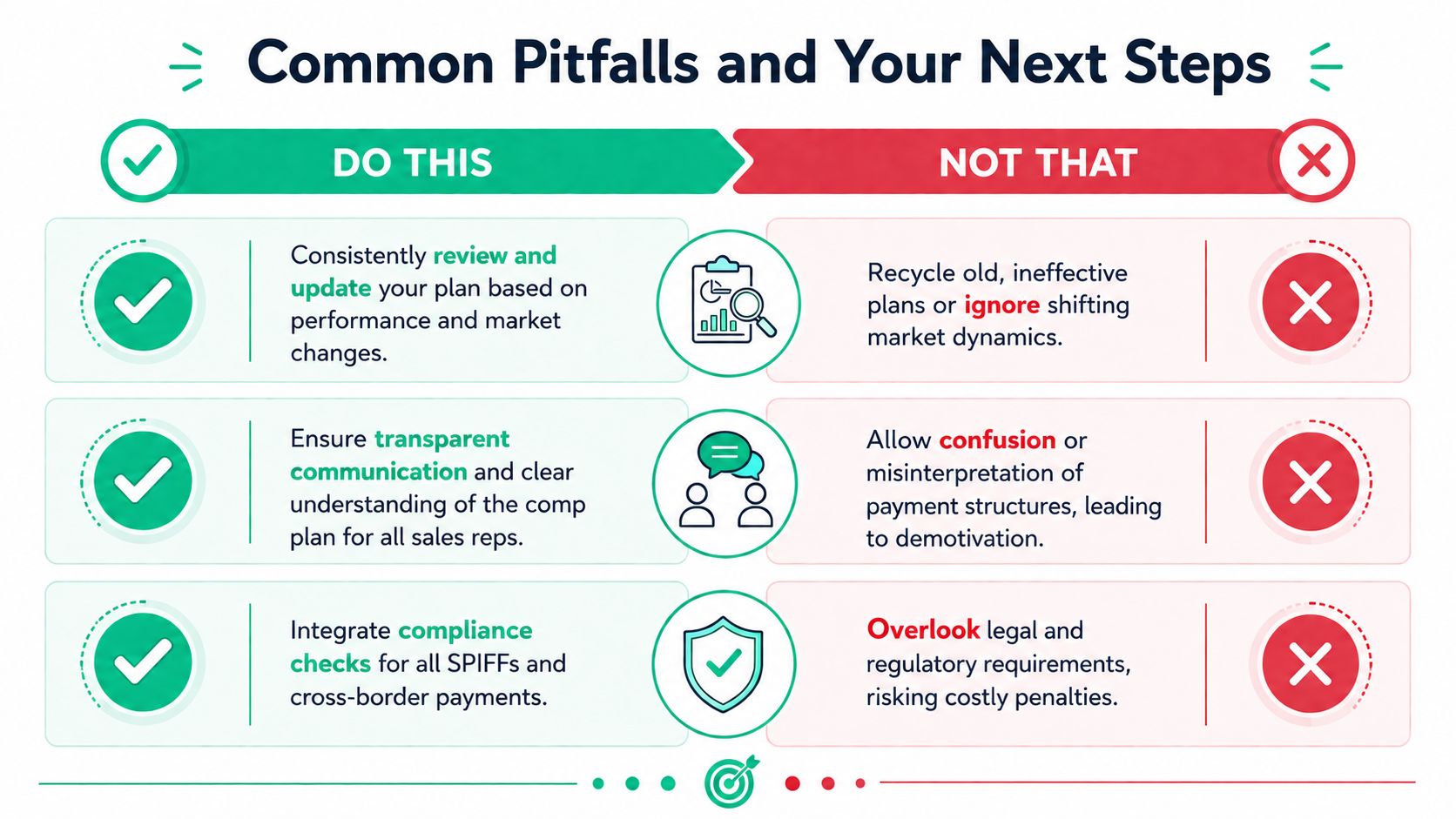
Here are the traps I see again and again.
Keep the plan boring in the right places. Clear payout logic wins. Consistent administration wins. Clean role design wins.
A practical checklist:
Software can help administer a good plan. It cannot rescue a dumb one. If you want a sense of how vendors in the category position themselves, you can view Varicent via LatoJobs. Useful for market context. Still, tools do not solve weak definitions, bad quotas, or founders who change their minds every month.
Start with decisions, not templates.
If you need remote SDR talent without building the recruiting and international ops engine yourself, HireSDR is a practical shortcut. That matters when your team is lean and your founders should be closing customers, not spending weeks screening candidates and untangling global hiring logistics.
Keep it simple. Pay for outcomes. Publish the rules. Then stick to them.

Most advice about remote inbound sales jobs is stuck in the same tired loop: post locally, pay through the nose, run endless interviews, then hope...

You know this movie. A candidate walks in with the polished resume, the familiar logos, the neat little ladder of “progression,” and everyone in the...

Stop hiring “sales ninjas” and start building a real team. You need to hire a salesperson. Sounds simple until the applicants start calling themselves Growth...

Tell us who you need. We'll have pre-vetted candidates in your inbox within 72 hours. No commitment until you hire.